Wazifa for Marriage in the Light of Quran and Hadith

Wazifa for Marriage is one of the most significant aspects of a Muslim’s life, as it is not only a social contract but also a spiritual union designed to foster mutual love, mercy, and tranquility.

In Islam, the concept of Wazifas refers to specific prayers, supplications (dua for marriage), or verses from the Quran that are recited with the intention of seeking Allah’s blessings in various aspects of life, including marriage.

Many individuals and families look for Wazifa to expedite or ease the process of marriage, especially in cases where there are delays or difficulties. The use of Wazifa, based on the teachings of the Quran and Hadith, is a means to seek Allah’s guidance and help while maintaining complete trust in His divine plan.

Concept of Wazifa in Islam

A Wazifa is a structured form of supplication or prayer, often performed consistently for a set number of days with sincerity, humility, and trust in Allah’s mercy.

Although Wazifa is not directly mentioned in the Quran or Hadith as a specific term, its practice is based on the encouragement to engage in dhikr (remembrance of Allah) and dua for marriage (supplication).

Prophet Muhammad (PBUH) said:

“The supplication is worship.” (Tirmidhi)

This highlights the importance of asking Allah for help through supplication. Wazifa, in this context, is a way to enhance a person’s spiritual connection and dependence on Allah.

Text and Translation of Wazifa for Marriage

Arabic

رَبِّ إِنِّيْ لِمَا أَنزَلْتَ إِلَيَّ مِنْ خَيْرٍ فَقِيْرٌ   

Translation

O my Rabb! I am truly in desperate need of any good that You send me!         (Surat al-Qasas, 28:24)

Marriage in Islam

Marriage is a significant sunnah of the Prophet Muhammad (PBUH). It is considered half of one’s faith.

It helps maintain chastity, fulfills emotional and social needs, and strengthens society through the foundation of the family.

The Quran states:

“And among His signs is this, that He created for you mates from among yourselves, that you may dwell in tranquility with them, and He has put love and mercy between your hearts.” (Quran 30:21)

This verse emphasizes the spiritual and emotional bond that marriage fosters, showing that it is a relationship blessed by Allah.

Recommended Wazifa for Marriage

Here are a few powerful Wazifa, based on verses from the Quran and authentic dua for marriage from the Hadith, that are often recited by Muslims with the intention of asking Allah for help in marriage matters.

  1. Surah Al-Furqan (25:74)

This verse is a powerful supplication for seeking righteous spouses and progeny. It can be recited by both men and women who wish to marry and desire a peaceful, loving family life.

“Our Lord, grant us from among our wives and offspring comfort to our eyes and make us an example for the righteous.” (Quran 25:74)

Recite this verse regularly after your five daily prayers, with the intention of asking Allah for a good spouse and a harmonious marriage.

  1. Surah Al-Anbiya (21:89)

This is the supplication of Prophet Zakariya (AS), who asked Allah for righteous offspring. While primarily about children, it is also applicable to seeking a spouse, as both desires are related to family life.

“My Lord, do not leave me alone [without offspring], though You are the best of inheritors.” (Quran 21:89)

Recite this dua for marriage, especially when experiencing delays in finding a spouse, while trusting that Allah’s timing is perfect.

  1. Dua of Prophet Musa (AS)

This supplication was made by Prophet Musa (AS) when he fled to Madyan, seeking refuge and guidance. Soon after, he was blessed with a home and a spouse.

“My Lord, indeed I am in need of whatever good You would send down to me.” (Quran 28:24)

This is a versatile dua and can be recited with the intention of asking Allah for the blessing of a spouse and a stable family life. It can be recited regularly, especially in times of hardship or confusion.

  1. Recitation of Ya Wajidu

Reciting the name of Allah “Ya Wajidu” (O Finder) 1111 times after Fajr prayer is believed by some scholars to help in finding a suitable spouse.

It is important to remember that the effectiveness of any wazifa depends on the individual’s sincerity, devotion, and patience.

Additional Supplications for Marriage

Aside from Quranic verses, there are other authentic dua for marriage from Hadith that Muslims can recite to seek Allah’s help in marriage:

Dua for seeking goodness: The Prophet (PBUH) recommended this dua for any important decision in life, including marriage.

“O Allah, I seek the guidance of Your knowledge, and I seek the help of Your omnipotence, and I beseech You for Your magnificent grace…” (Sahih Bukhari)

This dua, known as Dua Istikhara, is prayed when one is uncertain about a decision and is seeking Allah’s guidance.

Etiquettes of Performing Wazifa

To make a Wazifa more effective, certain etiquettes should be followed:

  1. Sincerity: Perform the Wazifa with sincerity, focusing on your intention, and seeking Allah’s pleasure and guidance.
  2. Consistency: It is important to be consistent in performing a Wazifa. Repetition with patience often brings about inner peace and strengthens one’s relationship with Allah.
  3. Trust in Allah: Always trust in Allah’s wisdom and timing. Even if the results are not immediate, trust that Allah has a plan that is better for you.
  4. Cleanliness: Ensure that you are in a state of cleanliness (wudu) when performing Wazifa, as this enhances spiritual purity and focus.
  5. Avoid Desperation: While reciting Wazifa, avoid feeling desperate or rushing the process. Instead, approach it with patience and belief that Allah knows what is best for you.

Conclusion

Wazifa for marriage, like any other supplication in Islam. Is a means to seek divine assistance while acknowledging that all outcomes are in Allah’s hands.

The Quran and Hadith provide numerous examples of supplications and prayers that can be recited to seek Allah’s blessings in marriage.

However, alongside reciting these Wazifa. One must also put in the effort to seek a suitable spouse and take practical steps. Such as consulting family and trusted advisors, and placing trust in Allah’s decree.

In the end, it is essential to remember that Allah’s wisdom is beyond our comprehension. What may seem like a delay or difficulty is often a test of patience and faith. Ultimately leading to what is best for us in both this life and the hereafter.

Duroode Fatih | Benefits and Importance

What is Duroode Fatih?

Duroode Fatih is a special prayer or “Salawat” that holds great significance in Islamic tradition. It is a way of sending blessings upon the Prophet Muhammad (peace be upon him). Which is highly revered in Islam.

The act of sending blessings upon the Prophet is mentioned in the Quran and is considered a meritorious deed. Darood Sharif is one of the many forms of Salawat.

Its uniqueness lies in its profound meanings and the numerous benefits attributed to it by scholars and spiritual leaders.

Text of Duroode Fatih Arabic with Translation

Duroode Fatih

Arabic

اللَّهُمَّ صَلِّ عَلَىٰ سَيِّدِنَا مُحَمَّدٍ ❁ الْفَاتِحِ لِمَا أُغْلِقَ ❁ وَالْخَاتِمِ لِمَا سَبَقَ ❁ نَاصِرِ الْحَقِّ بِالْحَقِّ ❁ وَالْهَادِي إِلَىٰ صِرَاطِكَ الْمُسْتَقِيمِ ❁ وَعَلَىٰ آلِهِ حَقَّ قَدْرِهِ وَمِقْدَارِهِ الْعَظِيمِ

Transliteration

Allahumma ṣalli ʿalā Sayyidinā Muḥammadini l-Fātiḥi limā ughliq(a), wa l-khātimi limā sabaq(a), nāṣiri l-ḥaqqi bi l-ḥaqq(i), wa l-hādī ilā ṣirāṭika l-mustaqīm(i), wa ʿalā ālihi ḥaqqa qadrihi wa miqdārihi l-ʿaẓīm.

Translation

O Allah, send prayers upon our master Muhammad, the opener of what was closed, and the seal of what had preceded, the helper of the truth by the Truth, and the guide to Your straight path. May Allah send prayers upon his Family according to his greatness and magnificent rank.

This prayer emphasizes Prophet Muhammad (PBUH) as the “Opener” of spiritual and worldly barriers, a “Seal”. The Prophets, and a “Guide” for humanity to follow the straight path.

Benefits of Duroode Fatih

  1. Spiritual Elevation
    Reciting Darood Sharif regularly is said to elevate one’s spiritual status. It helps develop a closer connection. The Prophet Muhammad (PBUH) and aligns one’s heart and soul with the teachings of Islam. This spiritual bond brings inner peace and comfort.
  2. Seeking Intercession of the Prophet (PBUH)
    One of the fundamental beliefs of Muslims is that the Prophet Muhammad (PBUH) will intercede on behalf of his followers on the Day of Judgment. Sending blessings upon him through Duroode Fatih increases. The likelihood of receiving his intercession in the Hereafter.
  3. Opening of Spiritual Doors
    As the text of Darood Sharif refers to the Prophet (PBUH) as the “Opener of what was closed,”, It is believed that reciting this prayer opens doors that are closed to one. It helps in overcoming obstacles in life and eases difficulties.
  4. Increased Reward
    Prophet Muhammad (PBUH) emphasized the virtue of sending blessings upon him, and every time a believer sends Salawat. They are rewarded tenfold by Allah. Brings immense rewards for the one who recites it consistently.
  5. Forgiveness of Sins
    Many scholars have noted that regular recitation of Salawat, including Darood Sharif, is a means of seeking forgiveness from Allah. It cleanses the heart, purifies the soul, and wipes away sins. For those who are remorseful and seek Allah’s forgiveness. Reciting Darood Sharif can be a powerful tool.
  6. Strengthens Faith and Reliance on Allah
    Darood Sharif is a prayer that acknowledges the greatness. The Prophet Muhammad (PBUH) and his pivotal role in guiding humanity to the truth. Which in turn strengthens their faith and reliance on Allah.
  7. Bringing Barakah (Blessings) to One’s Life
    Reciting Duroode Fatih is believed to bring barakah (blessings) into one’s life. The regular recitation of this prayer invites divine blessings into all aspects of life.

Importance of Duroode Fatih

  1. Connection with the Prophet Muhammad (PBUH)
    For Muslims, the Prophet Muhammad (PBUH) is the best of creation and the most beloved of Allah. Through prayers like Darood Sharif. Believers maintain a constant connection with him.
  2. Adherence to the Command of Allah
    In the Quran, Allah commands believers to send blessings upon the Prophet Muhammad (PBUH):

“Indeed, Allah and His angels send blessings upon the Prophet. O you who have believed, ask [ Allah to confer] blessing upon him and ask [ Allah to grant him] peace.” (Quran 33:56)

Reciting Darood Sharif is a way of adhering to this divine command. It shows obedience to Allah and a willingness to follow His guidance.

  1. A Source of Comfort and Relief
    Reciting Salawat, including Darood Sharif, brings comfort to believers in times of distress. It is a source of spiritual healing that brings inner peace. The Prophet’s (PBUH) role as a source of guidance and support.
  2. An Expression of Love and Gratitude
    Duroode Fatih is a way of expressing love and gratitude for the Prophet Muhammad (PBUH). The Prophet dedicated his life to delivering. The message of Islam, and by reciting this prayer, Muslims acknowledge his sacrifices and immense contributions to their spiritual well-being.

Duroode Tanjeena | Benefits and the Power of Recitation

Duroode Tanjeena (also spelled Durood-e-Tanjeena or Salat al-Tanjeena) is a special supplication (durood). The Islamic tradition, widely recited for seeking protection, relief from distress, and the fulfillment of one’s needs.

The word “Durood” refers to sending blessings upon the Prophet Muhammad (peace be upon him), and “Tanjeena” translates to “deliverance” or “rescue.” This particular durood is known for its emphasis on invoking blessings for protection and guidance during times of hardship.

Origin of Duroode Tanjeena

Durood Tanjeena is believed to have been revealed to a great scholar and saint during a period of crisis. Historical sources suggest that a group of people.

Were once on a sea voyage when their ship was caught in a storm. Fearing for their lives, they recited this durood, and miraculously, they were saved from the storm. Since then, it has become widely known as a prayer of deliverance.

Though there is no specific reference to Duroode Tanjeena in the main hadith collections It is popularly recited by Muslims, especially those in the Sufi tradition, for its spiritual benefits.

Text of Duroode Tanjeena

Durood Tanjeena reads:

Durood Tanjeena

Arabic

اللَّهُمَّ صَلِّ عَلَىٰ سَيِّدِنَا مُحَمَّدٍ صَلاَةً تُنْجِينَا بِهَا مِنْ جَمِيعِ الْأَهْوَالِ وَالْآفَاتِ ❁ وَتَقْضِى لَنَا بِهَا جَمِيعَ الْحَاجَاتِ ❁ وَتُطَهِّرُنَا بِهَا مِنْ جَمِيعِ السَّيِّئَاتِ❁ وَتَرْفَعُنَا بِهَا عِنْدَكَ أَعْلَى الدَّرَجَاتِ ❁ وَتُبَلِّغُنَا بِهَا أَقْصَى الْغَايَاتِ ❁ مِنْ جَمِيعِ الْخَيْرَاتِ ❁ فِى الْحَيَاةِ وَبَعْدَ الْمَمَاتِ❁ اِنَّکَ عَلٰی کُلِّ شَیْءٍ قَدِ یْرُ

Transliteration

“ALLAHUMMA SALLI ALA SAYYIDINA MUHAMMADIW WA ALA AALI SAYYIDINA MUHAMMADIN SALAATAN TUNAJJINA BIHA MIN JAMI’IL AHWAALI WAL’AFAATI WA TAQDILANA BIHA MIN JAMI’IL HAAJAATI WATU TAHIRUNA BIHA MIN JAMI’IS SAYYI AATI WATAR FA’UNA BI HAA A’LAD DARAJAATI WATU BAL LIGHUNA BIHA AQSAL GHAAYAATI MIN JAMI’IL KHAIRAATI FIL HAYAATI WABA’DAL MAMAATI INNAKA ALA KULLI SHAY IN QADEER.”

Translation

“O, Allah! Bestow blessings upon Muhammad (SAW), and his Family, such blessings through which You may relieve us of all anxieties and calamities. You may satisfy all our needs. You may clean us of all evils and thanks for which You may grant us high position and high rank and status in your presence, and You may lead us to the utmost limit of our aspirations and capacity in whatever is best in this world as well as in the world. Hereafter, as you have full power over everything.”

Benefits of Reciting Duroode Tanjeena

The Duroode Tanjeena is recited with deep faith and devotion for a range of spiritual, emotional, and worldly benefits. Here are some of the key benefits:

1. Relief from Distress and Calamities

One of the main reasons Muslims turn to this durood is for relief in times of crisis. The supplication is believed to bring deliverance from difficult situations, whether personal, financial, or emotional. Historically associated with deliverance from storms and disasters, many Muslims recite this prayer for divine protection and help during overwhelming situations.

2. Fulfilling Needs and Desires

The Duroode Tanjeena is believed to facilitate the fulfillment of one’s legitimate desires and needs. Whether someone is seeking financial stability, a solution to family problems, or success in their career, reciting this durood with sincerity is seen as a means of attaining divine assistance.

3. Spiritual Protection and Peace

Many Muslims recite this durood regularly to safeguard themselves and their loved ones from unseen harms, both in the spiritual and physical realms. It is believed to offer spiritual peace and protection, fostering a sense of inner calm and resilience in the face of life’s challenges.

4. Attaining Blessings and Mercy

Like all duroods, reciting Duroode Tanjeena brings abundant blessings. The act of sending blessings upon the Prophet Muhammad (peace be upon him) is an honorable deed. Many scholars emphasize that those who send blessings upon the Prophet are themselves recipients of blessings and mercy from Allah.

5. Improvement in Personal and Social Circumstances

Some who recite the Duroode Tanjeena do so to improve personal and social situations. Whether for reconciling strained relationships, improving health, or seeking guidance in decision-making. This prayer serves as a source of divine help.

How to Recite Duroode Tanjeena

Muslims are encouraged to recite Duroode Tanjeena with pure intentions and full concentration. The following are common practices associated with the recitation:

  • Frequency: Many people recite it 100 times or more during times of hardship, although there is no fixed number.
  • Timing: It can be recited at any time, though some prefer to recite it after Fajr or Isha prayers when they are focused and undisturbed.
  • Consistency: Some scholars advise that consistency in reciting this durood over a period of time brings more benefits, especially for those facing prolonged challenges.

Conclusion

Duroode Tanjeena is a profound and cherished supplication within the Islamic tradition. Often recited for divine intervention, deliverance from trials, and the fulfillment of one’s needs.

Durood Tanjeena

Its spiritual power lies not only in the act of sending blessings upon the Prophet Muhammad (peace be upon him) but also in the faith and sincerity of the person reciting it.

Whether recited for relief from crises or simply as a daily practice for attaining peace and blessings. Duroode Tanjeena continues to hold a special place in the hearts of Muslims worldwide. It serves as a reminder of the mercy and assistance that can be invoked through sincere supplication and trust in Allah.

Sixth Kalima Radde Kufr | Significance, Recitation and Benefits

The six Kalimas are a foundational part of a Muslim’s faith, summarizing essential beliefs in short, potent declarations. Among them. The Sixth Kalima Radde Kufr, known as Radde Kufr (Repudiation of Disbelief), holds special significance.

It reaffirms a Muslim’s renunciation of disbelief and reaffirmation of Tawhid (the oneness of God) and the Prophethood of Muhammad (PBUH). This Kalima emphasizes one’s clear distinction from any belief or statement that contradicts Islam.

Text and Translation of the Sixth Kalima

Sixth Kalima Radde Kufr reads:

Sixth Kalima Radde Kufr

Arabic

اللَّهُمَّ إِنِّي أَعُوذُ بِكَ مِنْ أَنْ أُشْرِكَ بِكَ شَيْئًا وَأَنَا أَعْلَمُ بِهِ، وَأَسْتَغْفِرُكَ لِمَا لَا أَعْلَمُ بِهِ، تُبْتُ عَنْهُ وَتَبَرَّأْتُ مِنَ الْكُفْرِ وَالشِّرْكِ وَالْكِذْبِ وَالْغِيبَةِ وَالْبِدْعَةِ وَالنَّمِيمَةِ وَالْفَوَاحِشِ وَالْبُهْتَانِ وَالْمَعَاصِي كُلِّهَا، وَأَسْلَمْتُ وَأَقُولُ لَا إِلَهَ إِلَّا اللَّهُ مُحَمَّدٌ رَسُولُ اللَّهِ.

Translation

“O Allah! I seek refuge in You from knowingly associating anything with You, and I seek Your forgiveness for that which I do unknowingly. I repent from it, and I renounce disbelief, polytheism, falsehood, backbiting, innovation, slander, obscenity, defamation, and all sins. I embrace Islam and declare: There is no god but Allah, Muhammad is the Messenger of Allah.”

Significance of the Sixth Kalima Radde Kufr

  1. Repudiation of Disbelief: The core essence of this Kalima is to renounce disbelief (kufr) and all forms of polytheism (shirk). It serves as a reminder of the purity of one’s faith and allegiance to the oneness of God.
  2. Affirmation of Faith: By reciting the Sixth Kalima, one renews their testimony of faith, reminding oneself of the Islamic declaration of Tawhid and the Prophethood of Muhammad (PBUH).
  3. Seeking Protection and Forgiveness: The recitation of this Kalima is a plea for protection against engaging in shirk knowingly and an act of repentance for any unknown sins.
  4. Spiritual Cleansing: It renounces various harmful actions like lying, backbiting, and slander, which helps foster a spiritual purification and moral uprightness.

Benefits of Reciting the Sixth Kalima Radde Kufr

  1. Strengthens Faith: Regular recitation serves as a spiritual reaffirmation of belief and clears any doubts or hidden inclinations toward disbelief.
  2. Increases God-consciousness (Taqwa): The Kalima helps individuals stay mindful of their deeds, promoting vigilance in avoiding shirk, innovation (bid’ah), and sinful behaviors.
  3. Purification of the Heart: By renouncing sinful actions like lying, slander, and backbiting, reciting the Sixth Kalima Radde Kufr promotes the cleansing of the heart and soul.
  4. Repentance and Forgiveness: It acts as a means of seeking Allah’s forgiveness for both conscious and unconscious sins, offering a pathway to spiritual renewal.
  5. Protection from Polytheism: Reciting this Kalima offers protection from knowingly or unknowingly engaging in acts of shirk, thus safeguarding the purity of one’s faith.
  6. Moral Integrity: Since the Kalima denounces lying, slander, and immoral behavior, it reinforces a commitment to honesty, humility, and kindness in personal dealings.

Incorporating the Sixth Kalima into Daily Life

  1. Morning and Evening Remembrance (Dhikr): Starting and ending the day with the recitation. The Sixth Kalima Radde Kufr helps solidify one’s connection to Allah. Reminds one to stay true to Islamic principles throughout the day.
  2. Post-Salah Recitation: Incorporating the Sixth Kalima into one’s daily prayers (Salah) after the obligatory acts. Worship can serve as a way to seek forgiveness and reaffirm one’s faith.
  3. During Times of Doubt or Weakness: In moments of uncertainty, fear, or when one feels their faith wavering. The recitation of the Sixth Kalima Radde Kufr can be a source of spiritual strength and guidance.
  4. Teaching It to Children: Introducing children to the Sixth Kalima and explaining. Its significance can help instill a strong sense of belief in Tawhid. The rejection of kufr from an early age.
  5. Reflective Practice: Reciting the Kalima during moments of reflection or spiritual contemplation can deepen one’s connection to Allah, encouraging humility, gratitude, and a stronger moral compass.
  6. Before Seeking Forgiveness: When making dua (supplication) for forgiveness. Reciting the Sixth Kalima Radde Kufr can serve as a heartfelt prelude to seeking repentance from Allah. Reinforcing a commitment to avoid sin.

Conclusion

Sixth Kalima Radde Kufr is a powerful declaration of faith and renunciation of disbelief. By integrating its recitation into daily life. Muslims can strengthen their relationship with Allah.

Purify their hearts, and remain vigilant against sinful and immoral behaviors. It serves as both a reminder of one’s allegiance to Islam. A protection from shirk and kufr. Guiding believers to lead a life rooted in sincerity. Righteousness, and submission to the will of Allah.

Fifth Kalima Astaghfar | Significance, Reciting, and Benefits

Fifth Kalima, known as Kalima Astaghfar, is a profound declaration of repentance in Islam. The word “Astaghfar” itself is derived from the Arabic term “Ghafara,” meaning to seek forgiveness.

This Kalima is a supplication that Muslims recite to ask for Allah’s forgiveness for their sins, both known and unknown, major and minor. It emphasizes the importance of turning back to Allah with humility and sincerity.

Text of the Fifth Kalima Astaghfar

Fifth Kalima Astaghfar reads:

Fifth Kalima Astaghfar

Arabic

أَسْتَغْفِرُ اللهَ رَبِّي مِنْ كُلِّ ذَنْبٍ أَذْنَبْتُهُ عَمَدًا أَوْ خَطَأً سِرًّا أَوْ عَلَانِيَةً وَأَتُوبُ إِلَيْهِ مِنَ الذَّنْبِ الَّذِي أَعْلَمُ وَمِنَ الذَّنْبِ الَّذِي لَا أَعْلَمُ إِنَّكَ أَنْتَ عَلَّامُ الْغُيُوبِ وَسَتَّارُ الْعُيُوبِ وَغَفَّارُ الذُّنُوبِ وَلَا حَوْلَ وَلَا قُوَّةَ إِلَّا بِاللهِ الْعَلِيِّ الْعَظِيمِ

Translation

“I seek forgiveness from Allah, my Lord, from every sin I committed knowingly or unknowingly, secretly or openly. I turn to Him in repentance from the sin I am aware of and the sin I am not aware of. Indeed, You are the Knower of the unseen, the Concealer of faults, and the Forgiver of sins. There is no power and no strength except with Allah, the Most High, the Most Great.”

Significance of the Fifth Kalima Astaghfar

The Fifth Kalima represents an essential aspect of Islamic teachings: the continuous need for repentance and seeking forgiveness from Allah.

The Holy Quran and Hadith emphasize the virtues of frequently turning to Allah in repentance:

  • Quran (Surah Al-Baqarah, 2:222):

“Indeed, Allah loves those who are constantly repentant and loves those who purify themselves.”

  • Hadith:

The Prophet Muhammad (peace be upon him) said,

“By Allah, I seek forgiveness from Allah and repent to Him more than seventy times a day.” (Sahih al-Bukhari)

This Kalima reflects the essence of human humility and recognition of our shortcomings, as even the Prophet (PBUH), who was sinless, would often seek Allah’s forgiveness.

It serves as a reminder that everyone is in need of forgiveness and that no one is free from the possibility of sin, whether done knowingly or unknowingly.

Benefits of Reciting Kalima Astaghfar

  1. Cleanses the Soul: Reciting the Fifth Kalima brings spiritual purification by cleansing the heart from the darkness of sin. The act of seeking forgiveness is one of the highest forms of worship as it recognizes Allah’s omniscience and mercy.
  2. Forgiveness of Sins: One of the greatest benefits is the hope and assurance of Allah’s forgiveness. As the Qur’an says, “Say, O My servants who have transgressed against themselves [by sinning], do not despair of the mercy of Allah. Indeed, Allah forgives all sins…” (Surah Az-Zumar 39:53). Reciting this Kalima with sincerity can wipe away the sins of the past.
  3. Increased Peace of Mind: Constantly seeking Allah’s forgiveness removes the burden of guilt and regret from one’s conscience, leading to inner peace. It strengthens one’s bond with Allah and provides comfort in knowing that Allah is merciful and compassionate.
  4. Protection from Future Sins: Astaghfar not only cleanses past sins but also acts as a deterrent from committing further wrongs. The act of repentance fosters mindfulness, making a person more aware of their actions and more cautious about falling into sin again.
  5. Increases Provision and Solves Problems: The Prophet (PBUH) said, “Whoever continually seeks pardon (from Allah), Allah will appoint for him a way out of every distress and relief from every anxiety, and will provide for him from sources he never could imagine.” (Sunan Ibn Majah 3819).

Incorporating Kalima Astaghfar into Daily Life

While understanding the significance and benefits of the Fifth Kalima is essential, incorporating it into daily life is where its true value lies. Here are a few practical ways to do this:

  1. Morning and Evening Routine: Begin and end your day by reciting the Fifth Kalima. Making this a regular part of your morning and evening routine ensures that you start and conclude your day by seeking Allah’s forgiveness and mercy. This practice serves as a protective shield against the temptations and trials of the day.
  2. After Salah (Prayer): Incorporating the recitation of Kalima Astaghfar after each Salah can be a powerful way of seeking forgiveness consistently. After the obligatory prayers, when one is still in a state of humility and connection with Allah, reciting this Kalima can be a peaceful and reflective act.
  3. In Times of Hardship or Stress: When facing difficult situations or when overwhelmed by guilt, recite Kalima Astaghfar. This not only helps alleviate feelings of distress but also brings tranquility, knowing that Allah is capable of forgiving and resolving all difficulties.
  4. During Daily Commutes or Downtime: Utilize idle times during the day, such as during commutes, while waiting in line, or even while doing household tasks, to recite Kalima Astaghfar. Such moments provide opportunities to reconnect with Allah in a meaningful way.
  5. Before Sleep: End your day with sincere repentance by reciting Kalima Astaghfar before going to bed. Reflect on the day’s actions and ask Allah to forgive any shortcomings or mistakes. This practice promotes a habit of self-accountability and reinforces spiritual mindfulness.

Conclusion

Fifth Kalima Astaghfar is more than just a recitation it’s a pathway to self-reflection, repentance, and ultimately, spiritual growth. By regularly seeking forgiveness from Allah, we acknowledge our flaws and reaffirm our dependence on His mercy and guidance.

Incorporating Kalima Astaghfar into our daily routines not only purifies our souls but also brings us closer to Allah, grants peace of mind, and protects us from future sins. Let us make it a habit to recite this powerful supplication. Turning to Allah in humility and devotion, and trust in His boundless forgiveness.

Fourth Kalima Tauheed | Significance and Recitation

Fourth Kalima Tauheed, also known as the Kalima of Monotheism, holds profound significance in Islamic teachings as it reflects the core belief in the oneness of Allah (Tauheed).

It encapsulates the essence of faith and serves as a constant reminder of the unity, sovereignty, and majesty of Allah, which lies at the heart of a Muslim’s spiritual journey.

Fourth Kalima Tauheed Meaning and Recitation

Fourth Kalima Tauheed reads: 

Fourth Kalima Tauheed

Arabic

لَآ اِلٰهَ اِلَّا اللهُ وَحْدَهٗ لَا شَرِيْكَ لَهٗ لَهُ الْمُلْكُ وَ لَهُ الْحَمْدُ يُحْىٖ وَ يُمِيْتُ وَ هُوَحَیٌّ لَّا يَمُوْتُ اَبَدًا اَبَدًاؕ ذُو الْجَلَالِ وَالْاِكْرَامِؕ بِيَدِهِ الْخَيْرُؕ وَهُوَ عَلٰى كُلِّ شیْ ٍٔ قَدِیْرٌؕ.

Transliteration

“Laa ilaaha illallahu wahdahu laa shareekalahu, lahul-mulku wa lahul-hamdu yuhyee wa yumeetu wa huwa hayyun laa yamootu abadan abada, zul-jalaali wal-ikraam, biyadihil-khair, wa huwa ‘alaa kulli shay’in qadeer.”

Translation

There is none worthy of worship except Allah. He is One; He has no partner. His is the kingdom, and His is the praise, and He gives life and causes death. He is ever-living and will never die. Possessor of majesty and honor, in His hand is all good, and He has power over everything.

Significance of the Fourth Kalima

Fourth Kalima is central to a Muslim’s declaration of faith. By acknowledging the oneness of Allah and His supreme authority over all existence.

It reinforces the core belief that Allah is the sole Creator, Sustainer, and Controller of life and death. The Kalima also reminds Muslims of Allah’s eternal nature, unchanging majesty, and complete control over the universe.

Recitation of the Fourth Kalima serves multiple spiritual purposes:

  1. Affirmation of Faith: It reaffirms a believer’s commitment to the core tenet of Islam Tauheed (monotheism) which forms the foundation of all acts of worship.
  2. Expression of Gratitude and Praise: By acknowledging that all praise belongs to Allah, the Kalima encourages believers to express their gratitude for the blessings and guidance He bestows.
  3. Reminder of Life’s Ephemerality: The mention of Allah’s power over life and death reminds us that our time in this world is temporary. That we must strive for righteousness in preparation for the afterlife.
  4. Strengthening of Trust in Allah: By recognizing Allah’s control over everything, believers are encouraged to place. Their trust fully in Him, knowing that nothing occurs without His will.

Incorporating the Fourth Kalima Tauheed into Daily Life

While the Fourth Kalima holds deep theological meaning. It is also practical and can be incorporated into a Muslim’s daily life in several meaningful ways.

  1. Daily Recitation: The simplest way to make the Fourth Kalima a part of your life is through regular recitation. Many Muslims recite the Kalima during. Their morning and evening prayers or after completing the five daily prayers (Salah). Reciting the Fourth Kalima Tauheed not only increases one’s awareness of Allah’s presence but also brings peace and tranquility to the heart.
  2. Meditation and Reflection: The Kalima offers an opportunity for Muslims to reflect. The oneness of Allah and the transient nature of life. Taking a few moments in the day to meditate on its meaning can help re-center one’s focus. The greater purpose of life and remind oneself of the eternal nature of the hereafter.
  3. In Difficult Times: In moments of hardship, stress, or anxiety. The recitation of the Fourth Kalima can serve as a powerful reminder that Allah is in control. By recognizing that Allah has power over all things. The Giver of life and death, believers can find comfort in the knowledge. That Allah’s wisdom is far-reaching, and all matters rest with Him.
  4. Expression of Gratitude: The Kalima encourages believers to show gratitude towards Allah. Who is the ultimate source of all blessings. Incorporating the Fourth Kalima Tauheed into one’s daily dhikr (remembrance of Allah). Serves as a constant expression of thanks for the good in life, whether during times of joy or trial.
  5. Instilling Tauheed in Family Life: Parents can use the Fourth Kalima to teach children the importance of Tauheed in Islam. Regular recitation together as a family not only strengthens the bond between family members but also instills an understanding of Allah’s oneness and majesty from a young age.

Benefits of Reciting the Fourth Kalima

  1. Increases Rewards: Every time the Kalima is recited, it brings the reciter closer to Allah. The Prophet Muhammad (peace be upon him) taught that remembering Allah through such words carries immense rewards in the hereafter.
  2. Cleanses the Heart: Constant recitation of the Kalima helps to purify the heart from arrogance, pride, and other worldly distractions by keeping Allah’s majesty in focus.
  3. Peace of Mind: By acknowledging Allah’s complete control over every aspect of life, a believer can achieve a sense of peace and acceptance, knowing that everything happens according to Allah’s divine plan.
  4. Protection from Shirk (Polytheism): Constant recitation of the Fourth Kalima Tauheed helps protect a person from falling into the trap of associating partners with Allah, which is the gravest sin in Islam. By regularly affirming Allah’s oneness, the reciter fortifies their belief against any form of shirk.

Conclusion

The Fourth Kalima Tauheed (Tauheed) is more than a phrase; it is a powerful expression of a Muslim’s core belief in the oneness of Allah. By regularly reciting it, reflecting on its meaning, and integrating. Its message into daily life, Muslims can nurture.

Their relationship with Allah, gain inner peace, and remain focused on their ultimate purpose. It serves as a timeless reminder that Allah is in control, and by submitting to His will, one can attain true contentment and success in this life and the hereafter.

Third Kalima Tamjeed | Significance, Recitation and Benefits

Introduction

In the practice of Islam, the recitation of Kalimas holds a prominent place, each carrying deep spiritual meanings and serving as a powerful form of worship. Among the six Kalimas.

Third Kalima Tamjeed focuses on glorifying Allah, the Almighty. The word Tamjeed comes from the Arabic root meaning “glory” or “praise,” and this Kalima is a profound expression of the majesty and greatness of Allah.

In this article, we will explore the significance, recitation, benefits, and ways to incorporate the Third Kalima into our daily lives for spiritual enrichment.

Text and Translation of the Third Kalima Tamjeed

Third Kalima Tamjeed reads:

Third Kalima Tamjeed

Arabic

سُبْحَانَ اللَّهِ وَالْحَمْدُ لِلَّهِ وَلَا إِلٰهَ إِلَّا اللَّهُ وَاللَّهُ أَكْبَرُ وَلَا حَوْلَ وَلَا قُوَّةَ إِلَّا بِاللَّهِ الْعَلِيِّ الْعَظِيمِ

Transliteration

Subhanallahi walhamdulillahi wa la ilaha illallahu wallahu akbar wa la hawla wa la quwwata illa billahil ‘aliyyil ‘azim.

Translation

Glory be to Allah, and all praise is for Allah, and there is no deity but Allah, and Allah is the Greatest. There is no power and no strength except with Allah, the Exalted, the Great.

Significance of the Third Kalima Tamjeed

Third Kalima encapsulates four key concepts of Islamic belief:

glorifying Allah (Subhanallah), expressing gratitude to Him (Alhamdulillah), affirming His oneness (La ilaha illallah), and acknowledging His greatness (Allahu Akbar).

It concludes by recognizing that all power belongs to Allah alone (La hawla wa la quwwata illa billah), emphasizing total dependence on Allah for strength and guidance.

Each part of this Kalima carries profound spiritual significance:

  1. Subhanallah (Glory be to Allah): This phrase reflects the perfection and purity of Allah, free from any deficiency or imperfection.
  2. Alhamdulillah (All praise is for Allah): A reminder to be grateful for all blessings, both seen and unseen.
  3. La ilaha illallah (There is no deity but Allah): The foundation of Tawhid (the Oneness of Allah), the core of Islamic faith.
  4. Allahu Akbar (Allah is the Greatest): A declaration of Allah’s superiority over all things, reminding us to prioritize Him in every aspect of life.
  5. La hawla wa la quwwata illa billah (strength except with Allah): This phrase instills humility and reliance on Allah for all our needs, acknowledging that human effort alone is insufficient.

Benefits of Reciting the Third Kalima

Reciting the Third Kalima regularly brings immense spiritual, emotional, and physical benefits. Some of the key benefits include:

  1. Forgiveness and Mercy: According to Hadith, the frequent recitation of phrases like Subhanallah, Alhamdulillah, and Allahu Akbar brings forgiveness of sins. They are beloved to Allah and bring the reciter closer to Him.
  2. Strengthens Faith: recitation of La ilaha illallah reinforces one’s belief in Tawhid and strengthens the connection with Allah. It helps to purify the heart and keeps the mind focused on the greatness of Allah, reducing attachment to worldly distractions.
  3. Protection from Evil: La hawla wa la quwwata illa billah is often recited as a means of seeking Allah’s protection from harm, evil, and the trials of life. It serves as a shield for believers in times of difficulty.
  4. Inner Peace and Contentment: Third Kalima helps the believer attain inner peace. Reciting it reminds us of Allah’s power and greatness, which can provide comfort during stress or uncertainty. Gratitude through Alhamdulillah cultivates contentment, while acknowledging Allah’s superiority through Allahu Akbar reduces pride and arrogance.
  5. A Means of Continuous Rewards: Third Kalima is easy to recite and can be repeated throughout the day, allowing for constant remembrance of Allah (Dhikr). This form of Dhikr is highly recommended as a way to earn continuous rewards (sawab) in both this life and the Hereafter.

Incorporating the Third Kalima into Daily Life

Integrating the Third Kalima into your daily routine is not only spiritually uplifting but also practical. Here are some ways to make it a part of your everyday life:

  1. During Morning and Evening Dhikr: Set aside time each morning and evening to engage in Dhikr (remembrance of Allah). Reciting the Third Kalima during these moments helps set a positive tone for the day and brings peace before sleep.
  2. As a Response to Blessings: When receiving good news or experiencing blessings, recite Alhamdulillah from the Third Kalima. This practice cultivates gratitude and helps to keep us grounded in times of success.
  3. In Times of Difficulty: When facing challenges or feeling overwhelmed, reciting La hawla wa la quwwata illa billah can remind you of Allah’s control over all matters and provide strength to persevere.
  4. In Salah (Prayer): Incorporating Third Kalima within your Salah or personal supplications allows you to deepen the spiritual experience of prayer. You can also recite it during Sujood (prostration). This is one of the closest positions to Allah.
  5. While Engaged in Daily Tasks: Make a habit of reciting the Third Kalima while performing routine tasks. Such as driving, cooking, or walking. This form of constant Dhikr ensures that your heart and mind remain connected to Allah throughout the day.
  6. Teaching it to Family and Children: Encourage family members, especially children, to learn and recite. The Third Kalima as part of their daily Du’as and Dhikr. This instills a sense of spirituality from a young age and strengthens family bonds through shared faith practices.

Conclusion

Third Kalima Tamjeed, is a powerful expression of the glory, praise, and oneness of Allah. Regularly reciting it brings innumerable benefits. Spiritual forgiveness to emotional resilience.

By incorporating the Third Kalima into our daily routines. We can elevate our connection with Allah, strengthen our faith, and lead lives filled with gratitude, peace, and purpose.

Second Kalima Shahadat | An Overview and Benefits

The Kalimas in Islam serve as the foundational declarations of faith, encapsulating core beliefs in concise, powerful phrases. The Second Kalima, known as Kalima Shahadat, is one of these pivotal declarations.

It emphasizes the concept of monotheism. The central role of Prophet Muhammad (PBUH) as the final messenger of Allah.

Overview of the Second Kalima Shahadat

Second Kalima Shahadat reads:

Second Kalima Shahadat

Arabic

اَشْهَدُ اَنْ لَّآ اِلٰهَ اِلَّا اللهُ وَحْدَہٗ لَاشَرِيْكَ لَہٗ وَاَشْهَدُ اَنَّ مُحَمَّدًا عَبْدُهٗ وَرَسُولُہٗ

Transliteration

“Ash-hadu alla ilaha illallah wa ash-hadu anna Muhammadan abduhoo wa rasooluhu.”

Translation:

“I bear witness that there is no god but Allah, and I bear witness that Muhammad is His servant and messenger.”

Kalima is a testimony to the oneness of Allah (Tawhid) and affirms the prophethood of Muhammad (PBUH). The phrase serves as a declaration of faith, an acknowledgment.

That Allah is the only deity worthy of worship and that Prophet Muhammad (PBUH) is His messenger, who delivered the final divine message.

Meaning and Spiritual Significance

Second Kalima Shahadat holds profound spiritual and theological importance in Islam. The term Shahadat means “witness” or “testimony.”

By reciting this Kalima, a believer publicly and privately affirms their belief in the fundamental tenet of Islam: the unity of Allah (monotheism) and the acceptance of Muhammad (PBUH) as His chosen prophet.

This proclamation is a central aspect of a Muslim’s faith and identity. It’s not merely a statement; it is a binding commitment that dictates one’s worldview and conduct, providing a lens through which Muslims understand their relationship with the divine and with humanity.

Benefits of the Second Kalima Shahadat

benefits of understanding and reciting the Second Kalima Shahadat are both spiritual and practical:

  1. Strengthening Faith (Iman): Reciting the Kalima strengthens a Muslim’s faith in Allah and His oneness. It reaffirms their belief in the prophethood of Muhammad (PBUH), reminding them to follow his teachings.
  2. Inner Peace and Spiritual Clarity: By focusing on the oneness of Allah and recognizing Prophet Muhammad’s role, believers can achieve a sense of inner peace. This declaration can act as a spiritual anchor, offering clarity in moments of doubt or difficulty.
  3. Guidance in Daily Life: The Kalima serves as a constant reminder of a Muslim’s purpose in life: to worship Allah and follow the prophetic traditions (Sunnah). It helps guide decisions and actions, fostering ethical behavior and moral integrity.
  4. Protection from Misguidance: Belief in the oneness of Allah safeguards believers from idol worship and other forms of shirk (associating partners with Allah). The Kalima Shahadat is a shield against straying from the true path of Islam.
  5. Blessings and Forgiveness: There is a belief that consistent recitation of the Kalima leads to divine blessings and mercy. It cleanses the soul and earns Allah’s forgiveness for past transgressions.

Role of the Second Kalima Shahadat in Daily Life

The Second Kalima Shahadat is not just a theological concept; it has practical applications in a Muslim’s daily life. It influences the way believers interact with others, conduct their affairs, and approach challenges.

  1. Daily Remembrance of Allah (Dhikr): Muslims are encouraged to frequently recite the Kalima Shahadat as part of their daily prayers (Salah), as well as in their general remembrance of Allah. It helps to keep the heart and mind focused on divine guidance throughout the day.
  2. Moral and Ethical Conduct: The Kalima serves as a moral compass. A person who internalizes its meaning strives to live a life of honesty, kindness, and justice, as instructed by Allah and demonstrated by Prophet Muhammad (PBUH).
  3. Promoting Unity and Brotherhood: By affirming the oneness of Allah, Muslims are reminded of the unity of humanity under one Creator. This fosters a sense of brotherhood and community, emphasizing equality and cooperation among all Muslims.
  4. Courage in Facing Challenges: The Kalima Shahadat is a source of strength during difficulties. By acknowledging Allah’s omnipotence and trusting in His plan, a believer can face life’s challenges with confidence and patience, knowing that their faith will sustain them.
  5. Spreading the Message of Islam (Dawah): Muslims are encouraged to share the message of Islam with others, and the Kalima Shahadat is central to this mission.

Conclusion

The Second Kalima Shahadat holds a central place in the life of every Muslim, serving as a declaration of faith, a guide for ethical living, and a means of spiritual growth.

Beyond its spiritual benefits. The Kalima plays a practical role in shaping a Muslim’s character. Promoting unity, and offering guidance in moments of difficulty. Embracing the essence of the Second Kalima is a way for believers to live purposefully. A clear understanding of their divine obligations and their place in the world.

First Kalima Tayyab | Significance, Recitation, Benefits

First Kalima Tayyab , also known as “Kalima Tayyibah” or “Kalima-e-Tauheed,” is a fundamental declaration of faith in Islam. It is a concise yet profound statement that affirms the oneness of God and the prophethood of Muhammad (peace be upon him).

The world as an expression of their belief and devotion. Its significance goes beyond a mere ritual. It encapsulates the essence of Islam, offering immense spiritual and practical benefits to those who recite and internalize its meaning.

First Kalima Tayyab and Its Meaning

First Kalima Tayyab reads:

First Kalima Tayyab

Arabic

لَا إِلَٰهَ إِلَّا ٱللَّٰهُ مُحَمَّدٌ رَسُولُ ٱللَّٰهِ

Transliteration

“La ilaha illallah, Muhammadur Rasoolullah”

Translation

“There is no god but Allah, and Muhammad is the Messenger of Allah.”

simple yet powerful statement consists of two parts:

  1. Tauheed (Oneness of God): The phrase “La ilaha illallah” declares that there is no deity worthy of worship except Allah. It emphasizes monotheism, the core belief in Islam that Allah is the only Creator, Sustainer, and Ruler of the universe.
  2. Prophethood of Muhammad (PBUH): The second part, “Muhammadur Rasoolullah,” affirms that Muhammad (PBUH) is the final messenger of Allah. This completes the declaration of faith by acknowledging the guidance brought by the Prophet to humanity.

Significance of the First Kalima Tayyab

First Kalima is the foundation of the Islamic faith. It is the first step for anyone who wishes to embrace Islam.

It encapsulates the essence of belief in one God and the recognition of the Prophet Muhammad’s (PBUH) role as Allah’s messenger.

  1. Declaration of Faith: Reciting the First Kalima is a formal declaration of faith.
  2. Core of Islamic Identity: The First Kalima Tayyab is not only the key to becoming a Muslim but also a reminder of one’s core identity as a believer in the oneness of Allah and the finality of Muhammad’s (PBUH) prophethood.
  3. Protection from Shirk (Polytheism): By affirming the oneness of Allah, the First Kalima protects Muslims from the sin of associating partners with Allah, known as shirk, which is considered the gravest sin in Islam.
  4. Central Role in Daily Prayers: The essence of the First Kalima is echoed in various forms in the daily prayers (Salah), making it an integral part of a Muslim’s spiritual practice.

Benefits of Reciting the First Kalima Tayyab

Reciting the First Kalima Tayyab regularly has numerous spiritual, psychological, and emotional benefits.

  1. Strengthens Faith (Iman): Constant recitation strengthens a Muslim’s belief in Allah and reaffirms their connection to the core teachings of Islam. It keeps one mindful of Allah’s presence in their life.
  2. Spiritual Purification: Reciting the First Kalima purifies the soul, removing any trace of doubt or weakness in faith. It serves as a spiritual cleanser, keeping the heart and mind focused on Allah’s greatness.
  3. Forgiveness and Mercy: Allah has promised immense rewards and forgiveness for those who recite the First Kalima with sincerity. It is a source of mercy, bringing Allah’s favor upon the believer.
  4. Protection from Evil: First Kalima Tayyab is considered a protective shield against evil and harmful influences. Reciting it with faith helps safeguard one’s heart and mind from negative thoughts and actions.
  5. Peace and Tranquility: The remembrance of Allah (Dhikr), which includes the recitation of the First Kalima, brings peace and serenity to the heart. It helps alleviate stress, anxiety, and fear by instilling a sense of calm and reliance on Allah.

Incorporating the First Kalima Tayyab into Daily Life

A guide for how Muslims should live their daily lives. Incorporating the Kalima into various aspects of life can strengthen one’s connection to Allah and lead to spiritual growth.

  1. Daily Recitation: Muslims are encouraged to recite the First Kalima regularly as part of their daily Dhikr (remembrance of Allah). Setting aside a few moments in the morning and evening for recitation can help center the believer and foster mindfulness of Allah.
  2. Before Key Moments: Reciting the Kalima before embarking on important tasks or decisions serves as a reminder to place trust in Allah and to seek His guidance.
  3. During Difficult Times: In moments of hardship, distress, or fear. Reciting the First Kalima can provide comfort and reassurance. It reminds the believer that Allah is in control and that all affairs ultimately return to Him.
  4. Teaching and Sharing: Parents can instill the significance of the First Kalima Tayyab in their children by teaching them its meaning and encouraging its recitation from a young age. Sharing its importance with family and friends helps cultivate a shared bond of faith.
  5. Mindful Actions: The First Kalima calls Muslims to live a life that reflects their faith. Speak truthfully, and live righteously, as Allah and His Prophet (PBUH) have commanded.

Conclusion

First Kalima is the heart of Islamic belief and a powerful declaration of faith that carries deep spiritual significance.

By incorporating the First Kalima Tayyab into daily life, Muslims can continually align themselves with the core tenets of their faith and draw closer to their Creator.

Duroode Ibrahimi | Virtues and Significance in Quran and Hadith

Introduction

The Duroode Ibrahimi, also known as Salat al-Ibrahimiyya, holds a unique and significant place in Islamic worship. It is a form of sending blessings and salutations upon Prophet Ibrahim (Abraham) and Prophet Muhammad (peace be upon them), along with their families.

Muslims recite this prayer in every obligatory and voluntary Salah (prayer), specifically during the Tashahhud. The importance of Duroode Sharif is rooted deeply in both the Quran and Hadith, and its recitation is considered a virtuous act, bringing numerous spiritual benefits to those who engage in it sincerely.

Meaning and Structure of Duroode Ibrahimi

Duroode Sharif read With English Translation:

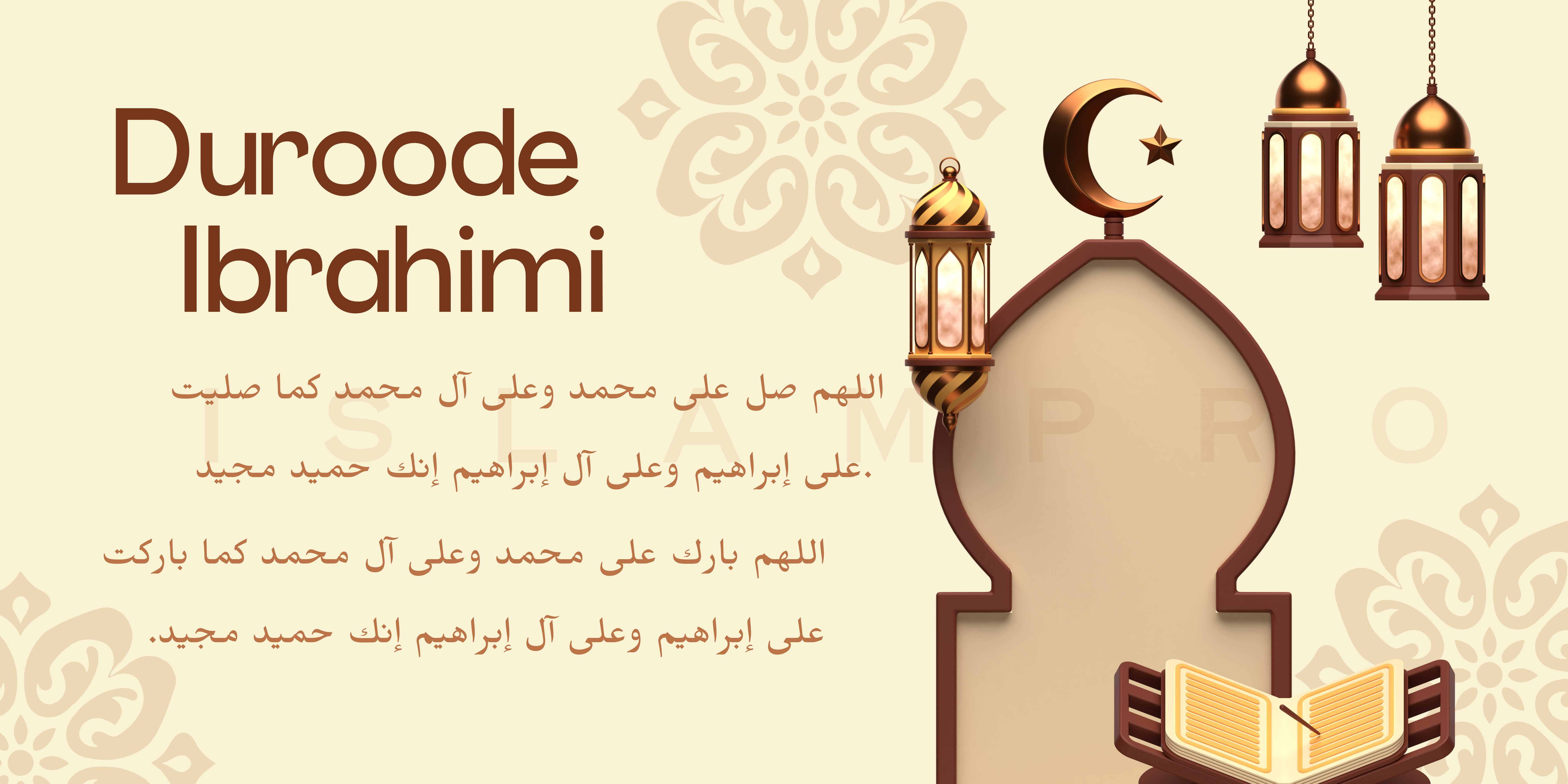
Duroode Ibrahimi English Translation

Arabic 

اللهم صل على محمد وعلى آل محمد كما صليت على إبراهيم وعلى آل إبراهيم إنك حميد مجيد.

اللهم بارك على محمد وعلى آل محمد كما باركت على إبراهيم وعلى آل إبراهيم إنك حميد مجيد.

Translation

“O Allah, send Your blessings upon Muhammad and the family of Muhammad, as You sent Your blessings upon Ibrahim and the family of Ibrahim. Verily, You are Praiseworthy and Glorious.

O Allah, bless Muhammad and the family of Muhammad as You blessed Ibrahim and the family of Ibrahim. Verily, You are Praiseworthy and Glorious.”

This supplication is a part of the Tashahhud, and it acknowledges the greatness of both Prophet Muhammad (PBUH) and Prophet Ibrahim (PBUH) while invoking Allah’s blessings upon their noble families.

Significance in Quran and Hadith

Although the Quran does not specifically mention the Duroode Ibrahimi, it emphasizes sending blessings upon Prophet Muhammad (PBUH).

In Surah Al-Ahzab (33:56),

Allah says

Allah says:

إِنَّ اللَّهَ وَمَلَائِكَتَهُ يُصَلُّونَ عَلَى النَّبِيِّ ۚ يَا أَيُّهَا الَّذِينَ آمَنُوا صَلُّوا عَلَيْهِ وَسَلِّمُوا تَسْلِيمًا

Translation 

“Indeed, Allah and His angels send blessings upon the Prophet. O you who have believed, ask [ Allah to confer] blessing upon him and ask [ Allah to grant him] peace.”

This verse encourages believers to regularly send blessings upon the Prophet. Which includes the recitation of the Duroode Sharif during prayers.

The virtues and importance of Duroode Ibrahimi are more clearly detailed in various Hadiths. Among these, one of the most significant narrations is from Sahih al-Bukhari and Sahih Muslim.

The companions of Prophet Muhammad (PBUH) asked him how they should send blessings upon him. In response, the Prophet (PBUH) taught them the Duroode Sharif.

Virtues of Reciting Duroode Ibrahimi

  1. Fulfillment of Allah’s Command: As highlighted in Surah Al-Ahzab, sending blessings upon Prophet Muhammad (PBUH) is a direct command from Allah. Reciting Duroode Ibrahimi in prayer is a way of fulfilling this divine obligation.
  2. Intercession on the Day of Judgment: The Prophet Muhammad (PBUH) said in a Hadith narrated by Al-Nasa’i and Ibn Hibban: “Whoever sends blessings upon me once, Allah will send blessings upon him tenfold.” By sending blessings upon the Prophet, a believer earns the favor of Allah, increasing their chances of receiving the Prophet’s intercession on the Day of Judgment.
  3. Spiritual Purification: Reciting Duroode Ibrahimi purifies the heart and soul of a believer. It instills love for the Prophet Muhammad (PBUH) and increases one’s consciousness of Allah’s mercy and grandeur.
  4. A Connection with Prophets: The Duroode Sharif honors both Prophet Muhammad (PBUH) and Prophet Ibrahim (PBUH), establishing a bond between two great prophets of Islam. This connection emphasizes the continuity of the prophetic mission and strengthens a believer’s understanding of the shared legacy between these two blessed individuals.
  5. Elevated Status in the Hereafter: Consistently reciting Duroode Sharif ensures that one’s prayers are accepted, and it increases their rank in the sight of Allah. A Hadith narrated by Ibn Majah mentions that the Prophet Muhammad (PBUH) said: “The closest people to me on the Day of Judgment will be those who sent the most blessings upon me.”

Role of Prophet Ibrahim (PBUH) in Duroode Ibrahimi

Prophet Ibrahim (PBUH), the forefather of numerous prophets, is widely recognized in Islam for his unwavering faith, devotion to Allah, and significant role in establishing monotheism.

By invoking blessings upon Prophet Ibrahim (PBUH) alongside Prophet Muhammad (PBUH), Muslims reflect upon the shared mission of both prophets in guiding humanity toward the worship of one God. Prophet Ibrahim’s significance is evident in the Quran as well.

In Surah Al-Baqarah (2:124),

Allah says

Allah says:

وَإِذِ ٱبْتَلَىٰٓ إِبْرَٰهِـمَ رَبُّهُۥ بِكَلِمَـٰتٍۢ فَأَتَمَّهُنَّۖ قَالَ إِنِّى جَاعِلُكَ لِلنَّاسِ إِمَامًۖا قَالَ وَمِن ذُرِّيَّتِىۖ قَالَ لَا يَنَالُ عَهْدِى ٱلظَّـٰلِمِينَ

Translation 

“And [mention] when Abraham was tried by his Lord with commands and he fulfilled them. [Allah] said, ‘Indeed, I will make you a leader for the people.’”

This verse highlights Ibrahim’s pivotal role as a model for leadership and submission to the will of Allah. Reciting Duroode Ibrahimi further reinforces this bond between the two great prophets and their missions.

Incorporating Duroode Ibrahimi into Daily Life

In addition to reciting Duroode Sharif during Salah, Muslims are encouraged to incorporate its recitation in other aspects of their lives. This can include:

  • Reciting it after completing other forms of dhikr (remembrance of Allah).
  • Reciting it during moments of reflection or supplication (dua).
  • Encouraging others to recite it to earn rewards from Allah.

The spiritual impact of this regular practice is profound. It not only strengthens one’s connection to the Prophet Muhammad (PBUH) but also brings peace, mercy, and blessings into their lives.

Conclusion

The Duroode Ibrahimi is more than just a prayer; it is a key act of devotion that encapsulates the love, respect, and gratitude Muslims have for both Prophet Muhammad (PBUH) and Prophet Ibrahim (PBUH). Rooted in Quranic principles and Prophetic teachings.

Durood Sharif

Its virtues are immense, providing both spiritual purification and divine rewards. Through its regular recitation, believers fulfill a critical aspect of their faith, drawing closer to Allah and His beloved messengers.

For every Muslim, understanding and embracing the significance of Duroode Sharif is essential in cultivating a deeper sense of worship, love, and connection with the prophets.