Allah Hafiz vs Khuda Hafiz | Meaning, Differences, and Proper Use

Allah Hafiz” is a phrase used predominantly in South Asia, particularly among Muslims. Allah Hafiz means “May God protect you” or “God be your protector”.

The word “Allah” refers to God in Arabic, and “Hafiz” means “protector” or “guardian.” So, Allah Hafiz’s meaning is: May Allah Protect you.

It is often used as a farewell phrase, expressing a wish for God’s protection over someone who is departing.

Allah Hafiz” is a phrase used to wish someone well or bid farewell. It means saying “take care” or “goodbye” with a sense of divine protection. People say it in different situations, like when someone leaves or before starting a journey, to wish them safety and blessings from God:

Various Ways ‘Allah Hafiz’ is Used in Everyday Life

1. Farewells

It is often used when parting ways with someone, similar to saying “Goodbye” or “Take care,” but with a spiritual dimension. For example, when leaving a friend or family member, one might say, “Allah Hafiz, see you soon.”

2. Ending Conversations

It can be used to end phone conversations, online chats, or any interaction where you are bidding farewell. For instance, “Alright, I have to go now. Allah Hafiz!

3. Expressing Concern

When someone is about to undertake a journey or face a challenging situation, “Allah Hafiz” can be used to express your concern and wish for their safety. For example, “You’re traveling tomorrow? Allah Hafiz, have a safe trip.”

4. After Prayers

It can be said after prayers or religious gatherings as a way of extending the blessings of the occasion. For example, after a group prayer, you might hear, “Allah Hafiz, everyone.”

5. Cultural Greetings

In some cultures, “Allah Hafiz” is used more broadly in social contexts, even beyond close relationships, as a respectful and caring way to end an interaction.

6. Letters and Messages

It is often used at the end of letters, emails, or messages, similar to how “Sincerely” or “Best regards” might be used in English. For example, “Thank you for your help. Allah Hafiz,”

Saying Allah Hafiz adds a special spiritual and cultural meaning to the conversation, showing that you wish for God’s care and protection for the person you are talking to.

Differences between Khuda Hafiz and Allah Hafiz

Khuda Hafiz and Allah Hafiz are ways to say goodbye with a blessing for God’s protection. They have some differences because of language and culture

Language Origin

  • Khuda Hafiz: “Khuda” is a Persian word for God. “Hafiz” is an Arabic word meaning protector or guardian. This phrase is more commonly used in Iran, Afghanistan, and parts of India and Pakistan, where Persian influence is significant.
  • Allah Hafiz: “Allah” is the Arabic word for God, and “Hafiz” means protector. This phrase is widely used in Arab-speaking countries and has become more popular in South Asia in recent years due to a shift towards using Arabic terms in religious contexts.

Cultural and Regional Usage

  • Khuda Hafiz: Traditionally used in Urdu-speaking regions, including India and Pakistan. It reflects a blend of Persian and Urdu linguistic traditions.
  • Allah Hafiz: Gained popularity in the same regions as a reflection of a growing emphasis on Arabic, particularly in religious contexts. This shift is partly influenced by an increased focus on using the Arabic name for God.

Religious Connotations

  • Khuda Hafiz: While it has strong Islamic connotations, it is also used more broadly among people of different faiths in Persian-speaking regions.
  • Allah Hafiz: Specifically emphasizes Islamic identity, as “Allah” is directly associated with the Islamic conception of God.

Modern Trends

  • Khuda Hafiz: Although still in use, especially among older generations and in literary contexts, its usage is gradually being overshadowed by “Allah Hafiz.”
  • Allah Hafiz: More commonly used in contemporary times, especially among younger generations and in contexts emphasizing Islamic terminology.

What is reply of Khuda Hafiz and Allah Hafiz

The reply to both “Khuda Hafiz” and “Allah Hafiz” is often the same, reflecting the same wish for divine protection and well-being. Common replies include:

Khuda Hafiz

  • Khuda Hafiz: same phrase as a reciprocal response
  • Allah Hafiz: if the speaker prefers the Arabic term
  • Fi Amanillah: meaning “In the protection of Allah”
  • Take care: less formal, more universal)

Allah Hafiz

  • Allah Hafiz: Same phrase as a reciprocal response
  • Khuda Hafiz: If the speaker prefers the Persian term
  • Fi Amanillah: meaning “In the protection of Allah”
  • Take care:  less formal, more universal

These replies all convey a mutual wish for the other person’s safety and well-being, aligning with the spiritual and protective nature of the original phrases.

In summary, both phrases serve the same purpose of wishing divine protection, but “Khuda Hafiz” has a Persian influence and broader cultural usage, while “Allah Hafiz” reflects a more direct Arabic influence and is increasingly preferred in modern Islamic contexts.

Ayatul Kursi with English and Urdu Translation

Ayatul Kursi is the 255th verse of Surah al Baqarah, which is the largest surah of the Quran. This is the best and most powerful Ayat (verse) in the Quran, and a Hadith proves that as well. Ayat al Kursi is a powerful ayat that provides protection, peace, and spiritual benefits.

The Prophet (Peace Be Upon Him) asked a companion, Abu Mundhir, about which verse is the greatest in the Quran. The companion started reciting Ayatul Kursi.

[button color=”primary” size=”medium” link=”https://islampro.net/wp-content/uploads/2025/05/Ayatul-kursi.mp3″]Download Audio[/button] [button color=”primary” size=”medium” link=”https://islampro.net/wp-content/uploads/2025/05/Ayatul-kursi.mp4″]Ayat Kursi Video[/button]

Listen to Ayat Al Kursi Audio

Ayatul Kursi Arabic Text

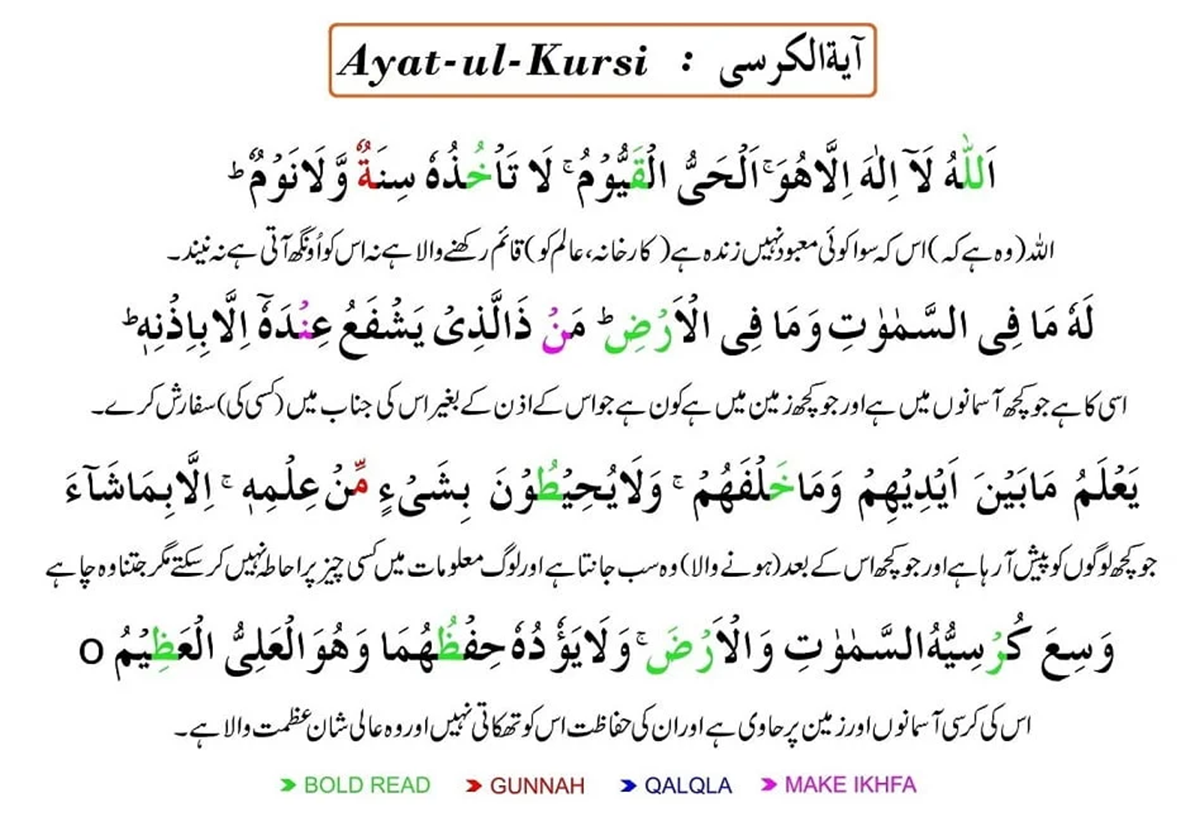
اللَّهُ لَا إِلَٰهَ إِلَّا هُوَ الْحَيُّ الْقَيُّومُ ۚ لَا تَأْخُذُهُ سِنَةٌ وَلَا نَوْمٌ ۚ لَهُ مَا فِي السَّمَاوَاتِ وَمَا فِي الْأَرْضِ ۗ مَنْ ذَا الَّذِي يَشْفَعُ عِندَهُ إِلَّا بِإِذْنِهِ ۚ يَعْلَمُ مَا بَيْنَ أَيْدِيهِمْ وَمَا خَلْفَهُمْ ۖ وَلَا يُحِيطُونَ بِشَيْءٍ مِّنْ عِلْمِهِ إِلَّا بِمَا شَاءَ ۚ وَسِعَ كُرْسِيُّهُ السَّمَاوَاتِ وَالْأَرْضَ ۖ وَلَا يَئُودُهُ حِفْظُهُمَا ۚ وَهُوَ الْعَلِيُّ الْعَظِيمُ

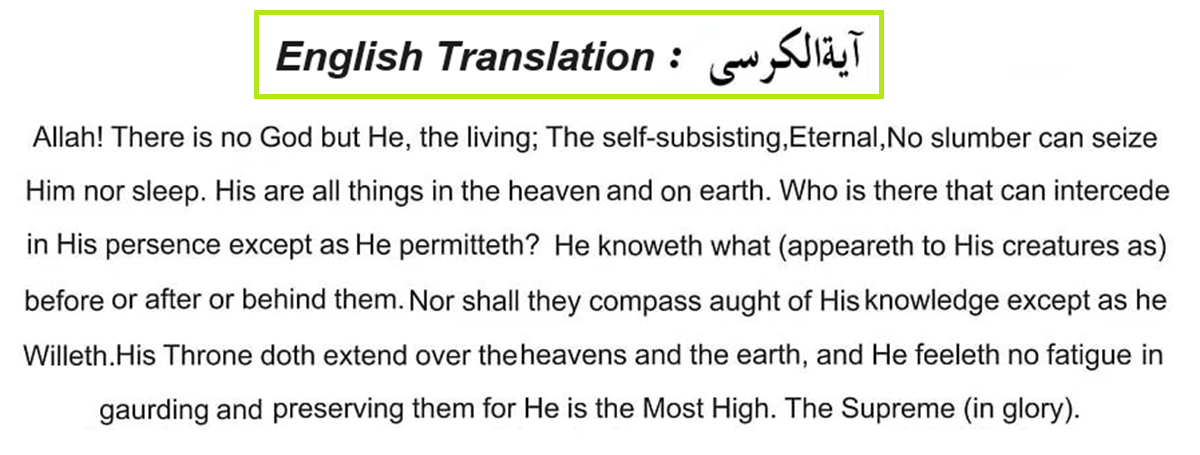
Ayatul Kursi English Translation:

Allah! There is no deity except Him, the Ever-Living, the Sustainer of [all] existence. Neither drowsiness overtakes Him nor sleep. To Him belongs whatever is in the heavens and whatever is on the earth. Who is it that can intercede with Him except by His permission? He knows what is before them and what will be after them, and they encompass not a thing of His knowledge except for what He wills. His Kursi (throne) extends over the heavens and the earth, and their preservation tires Him not. And He is the Most High, the Greatest.

Ayatul Kursi English Translation

Ayatul Kursi Urdu Translation:

اللہ! اس کے سوا کوئی عبادت کے لائق نہیں، وہ زندہ ہے، سب کا تھامنے والا ہے۔ اسے نہ اونگھ آتی ہے نہ نیند۔ اسی کا ہے جو کچھ آسمانوں اور زمین میں ہے۔ کون ہے جو اس کے حضور سفارش کرے بغیر اس کے اذن کے؟ وہ جانتا ہے جو ان کے آگے ہے اور جو ان کے پیچھے ہے اور وہ اس کے علم میں سے کچھ نہیں پاتے مگر جتنا وہ چاہے۔ اس کی کرسی آسمانوں اور زمین کو محیط ہے اور اسے ان کی حفاظت نہیں تھکاتی۔ اور وہی بلند ہے، عظیم ہے۔

ayatul kursi with urdu translation

Benefits of Reciting Ayatul Kursi

Ayatul Kursi, a verse from the Quran (Surah Al Baqarah, 2:255), is considered one of the most powerful verses. Here are some benefits of reciting Ayat ul Kursi:

  • Ayatul Kursi protects from harm, evil, and danger. Reciting it can safeguard you and your loved ones.
  • It brings tranquility and peace to the heart, reducing stress and anxiety.
  •  Reciting Ayat al Kursi can bring blessings to your home and protect it from negative influences.
  • It can help in overcoming obstacles and challenges in life.
  •  Reciting it strengthens your faith and connection to God.
  •  Reciting it before sleep keeps you safe from nightmares and disturbances.
  • Angels stay with you when you recite Ayatul Kursi, bringing divine protection and blessings.

Ayat Al Kursi Video

Question and Answers (FAQs)

  1. What is Ayatul Kursi?

The “Throne Verse” is verse 255 of Surah Al Baqarah, which describes Allah’s supreme authority and dominion over the heavens and earth.

  1. Why is Ayat Al-Kursi so important in Islam?

Among the most powerful verses in the Qur’an, Ayatul Kursi emphasizes Allah’s eternal existence, His control over all things, and His oneness. Reciting it regularly is also believed to offer protection, blessings, and divine guidance.

  1. What are the benefits of reciting Ayat Al Kursi?

The following are some of the benefits of reciting Ayat al Kursi:

  • An individual is protected from harm by it as it prevents evil and negative forces from entering his or her life.
  • During the night, angels will be appointed to guard the person who recite this prayer before going to sleep.
  • A Hadith states that reciting it after every obligatory prayer ensures entry into Paradise.
  1. Is there a specific time to recite Ayat Al Kursi?

In addition to being able to recite Ayatul Kursi at any time, it is particularly recommended after obligatory prayers, before sleeping, and when seeking protection or blessing.

  1. What did Prophet Muhammad (PBUH) say about reciting Ayatul Kursi?

The Prophet Muhammad (PBUH) said: “Whoever recites Ayatul Kursi after every obligatory prayer, nothing stands between him and Paradise except death.” (Sunan an-Nasa’i 9928). This hadith highlights the immense spiritual value of regularly reciting this verse.

  1. How does Ayatul Kursi offer protection from shayateen (evil forces)?

A narration from Sahih al-Bukhari states that when someone recites Ayat al-Kursi before sleeping, Allah assigns an angel to protect the person throughout the night.

  1. How can reciting Ayatul Kursi bring peace and tranquility?

As a result of affirming Allah’s supremacy and constant oversight, reciting the Ayat al Kursi makes a believer feel secure in his or her protection.

Mindful Remembrance: Creative Ways to Teach Dhikr to Kids

We as Muslims remember Allah every day. We recite the Quran and offer supplications. All of these practices combined help us to stay in touch with our creator and this is what is referred to as Dhikr.

Grown adults do not find it difficult to perform dhikr every day. On the other hand, young children need to learn how to perform these very basic practices. Many question why we need to perform dhikr and how they do it. It is important to teach them that Dhikr is remembering Allah by thanking him and offering prayers. It is a practice that helps to ground the children and make them stay connected to religion.

In this article, we will discuss how you can encourage your child to bring dhikr into their lives.

What Phrases Are Included in Daily Dhikr?

Various islamic terms are frequently used in our daily Islamic practice. Muslims often say simple words regularly; for example, every time we wish to show thankfulness and gratitude, we say Alhamdulillah. Similarly, various phrases are incorporated into our daily lives.

A few examples of these terms include “In sha Allah,” “Ma sha Allah,” “Tawakkaltu Alallah,” and so on. It is important for every Muslim, whether adult or child, to know the meaning behind these terms and when to use them in their daily worldly activities.

Creative Ways to Teach Dhikr to Kids

The traditional practices of teaching Dhikr to kids have become old-fashioned and repetitive. These days, children want something engaging and exciting to keep them hooked:

1.    A Dhikr Circle

As the name states, A dhikr circle consists of children sitting in a circle. The dhikr circle will look quite intriguing to the kids as they will think of it as a game. Once you gather all the children in one place, ask each child to say a little dhikr. It does not have to be complex. You can start by using simple words such as Subhan Allah Alhamdulillah or even Allahu Akbar.

You can even add actions to add some more fun to the practice. For example, the children can place a hand on their heart every time they say Alhamdulillah. Such sensory approaches help the kids to form a physical as well as emotional connection to the daily dhikr. The circle can end when every child has had their turn. You can then recite a dua that will signify the end of the activity.

2.    Bead Craft

Kids, especially girls, love doing arts and crafts. For a bead craft, you can again gather up children in a room. Make them engage by helping them create their own dhikr craft beads or a tasbih. They can color each of the beads differently and you can tell them that each color represents a dhikr. Kids always love to play with their own creations.

Once all the children complete the tasbih, you can teach them what each color means. For example, you can say red means Subhan Allah and purple means Allahu Akbar. The children can even decorate their dhikr tasbih however they like. They can add charms or flowers to the tasbih to give a personal touch. Creating an object that they have put their heart into will be a physical reminder that they need to say their daily adhkar regularly.

3.    Storytelling

Children love to listen to stories especially if you tell these stories in a fun way by adding physical actions. There are several names of Allah that hold special meaning behind them. For example, you can take the name Al Rahman, which means the merciful. You can then make up a story about someone’s generosity and then ask them which names of Allah the story represents. The child who guesses it correctly can get a small token of appreciation. Such practices will encourage the children to memorize their daily dhikr.

Every time you tell the kids a story, you can also ask them how they feel about it or if they have any questions about it. Such engaging and interactive sessions help the child stay focused. These practices also encourage them to incorporate the adhkar into their daily practical lives.

4.    Art Classes

Art is one of the best forms of expression not only for adults but children as well. An art and craft class is a mindful and engaging way through which the children can learn things easily. You can allow them to paint, draw, or even write the daily dhikr. They can learn how to do calligraphy or create a collage of several phrases altogether.

The children can also participate in a group activity where each child gets to write what every dhikr means to them. For example, you can use Alhamdulillah and ask them to draw what they are thankful for. Art and crafts are a beautiful way to remind the children that they need to recite these words daily.

5.    Nature Walks

Nothing is better than taking the children on a nature walk and showing them the wonders of Allah. Teach them how every leaf, flower and every part of the world functions in a certain way all by themselves. Seeing and appreciating the beauty of nature will surely make them remember how they perform dhikr in their daily lives.

Teach them to say Alhamdulillah every time they feel the rain or see the sun and Allahu Akbar every time they see something amazing. These activities help the children form a connection with Allah. After you end the walk, the children can gather in a circle and tell everyone how they feel.

6.    Challenge Charts

Just like every school teacher uses sticker charts to promote good behavior in their class, you can use challenge charts to encourage the children to remember Allah. All you need to do is create a chart with all the phrases on it. Every time a child uses the phrase in their practical life, they can paste a sticker on it.

The children can then get especially rewards for completing the chart. Such a routine will help the children to add these important phrases to their daily lives. They will also form a strong positive association with Allah through this engaging activity.

Conclusion

Teaching dhikr to children does not always have to be boring and dull. Teachers and parents should understand that children these days do not like to simply learn stuff over and over again. They need activities that engage them and add a fun twist to the learning routine.

Activities such as arts and crafts, storytelling, nature strolls, etc., are just a few ways through which you can teach your children the importance of these phrases. Teaching these mindful activities will help you create a strong foundation in your everyday life. Moreover, they will surely continue these practices once they grow up. Always remind them that Dhikr is more than just a daily obligation to fulfill. It is a source of peace and thankfulness.