
First Kalima Tayyab | Significance, Recitation, Benefits

First Kalima Tayyab , also known as “Kalima Tayyibah” or “Kalima-e-Tauheed,” is a fundamental declaration of faith in Islam. It is a concise yet profound statement that affirms the oneness of God and the prophethood of Muhammad (peace be upon him).

The world as an expression of their belief and devotion. Its significance goes beyond a mere ritual. It encapsulates the essence of Islam, offering immense spiritual and practical benefits to those who recite and internalize its meaning.

First Kalima Tayyab and Its Meaning

First Kalima Tayyab reads:

First Kalima Tayyab

Arabic

لَا إِلَٰهَ إِلَّا ٱللَّٰهُ مُحَمَّدٌ رَسُولُ ٱللَّٰهِ

Transliteration

“La ilaha illallah, Muhammadur Rasoolullah”

Translation

“There is no god but Allah, and Muhammad is the Messenger of Allah.”

simple yet powerful statement consists of two parts:

  1. Tauheed (Oneness of God): The phrase “La ilaha illallah” declares that there is no deity worthy of worship except Allah. It emphasizes monotheism, the core belief in Islam that Allah is the only Creator, Sustainer, and Ruler of the universe.
  2. Prophethood of Muhammad (PBUH): The second part, “Muhammadur Rasoolullah,” affirms that Muhammad (PBUH) is the final messenger of Allah. This completes the declaration of faith by acknowledging the guidance brought by the Prophet to humanity.

Significance of the First Kalima Tayyab

First Kalima is the foundation of the Islamic faith. It is the first step for anyone who wishes to embrace Islam.

It encapsulates the essence of belief in one God and the recognition of the Prophet Muhammad’s (PBUH) role as Allah’s messenger.

  1. Declaration of Faith: Reciting the First Kalima is a formal declaration of faith.
  2. Core of Islamic Identity: The First Kalima Tayyab is not only the key to becoming a Muslim but also a reminder of one’s core identity as a believer in the oneness of Allah and the finality of Muhammad’s (PBUH) prophethood.
  3. Protection from Shirk (Polytheism): By affirming the oneness of Allah, the First Kalima protects Muslims from the sin of associating partners with Allah, known as shirk, which is considered the gravest sin in Islam.
  4. Central Role in Daily Prayers: The essence of the First Kalima is echoed in various forms in the daily prayers (Salah), making it an integral part of a Muslim’s spiritual practice.

Benefits of Reciting the First Kalima Tayyab

Reciting the First Kalima Tayyab regularly has numerous spiritual, psychological, and emotional benefits.

  1. Strengthens Faith (Iman): Constant recitation strengthens a Muslim’s belief in Allah and reaffirms their connection to the core teachings of Islam. It keeps one mindful of Allah’s presence in their life.
  2. Spiritual Purification: Reciting the First Kalima purifies the soul, removing any trace of doubt or weakness in faith. It serves as a spiritual cleanser, keeping the heart and mind focused on Allah’s greatness.
  3. Forgiveness and Mercy: Allah has promised immense rewards and forgiveness for those who recite the First Kalima with sincerity. It is a source of mercy, bringing Allah’s favor upon the believer.
  4. Protection from Evil: First Kalima Tayyab is considered a protective shield against evil and harmful influences. Reciting it with faith helps safeguard one’s heart and mind from negative thoughts and actions.
  5. Peace and Tranquility: The remembrance of Allah (Dhikr), which includes the recitation of the First Kalima, brings peace and serenity to the heart. It helps alleviate stress, anxiety, and fear by instilling a sense of calm and reliance on Allah.

Incorporating the First Kalima Tayyab into Daily Life

A guide for how Muslims should live their daily lives. Incorporating the Kalima into various aspects of life can strengthen one’s connection to Allah and lead to spiritual growth.

  1. Daily Recitation: Muslims are encouraged to recite the First Kalima regularly as part of their daily Dhikr (remembrance of Allah). Setting aside a few moments in the morning and evening for recitation can help center the believer and foster mindfulness of Allah.
  2. Before Key Moments: Reciting the Kalima before embarking on important tasks or decisions serves as a reminder to place trust in Allah and to seek His guidance.
  3. During Difficult Times: In moments of hardship, distress, or fear. Reciting the First Kalima can provide comfort and reassurance. It reminds the believer that Allah is in control and that all affairs ultimately return to Him.
  4. Teaching and Sharing: Parents can instill the significance of the First Kalima Tayyab in their children by teaching them its meaning and encouraging its recitation from a young age. Sharing its importance with family and friends helps cultivate a shared bond of faith.
  5. Mindful Actions: The First Kalima calls Muslims to live a life that reflects their faith. Speak truthfully, and live righteously, as Allah and His Prophet (PBUH) have commanded.

Conclusion

First Kalima is the heart of Islamic belief and a powerful declaration of faith that carries deep spiritual significance.

By incorporating the First Kalima Tayyab into daily life, Muslims can continually align themselves with the core tenets of their faith and draw closer to their Creator.
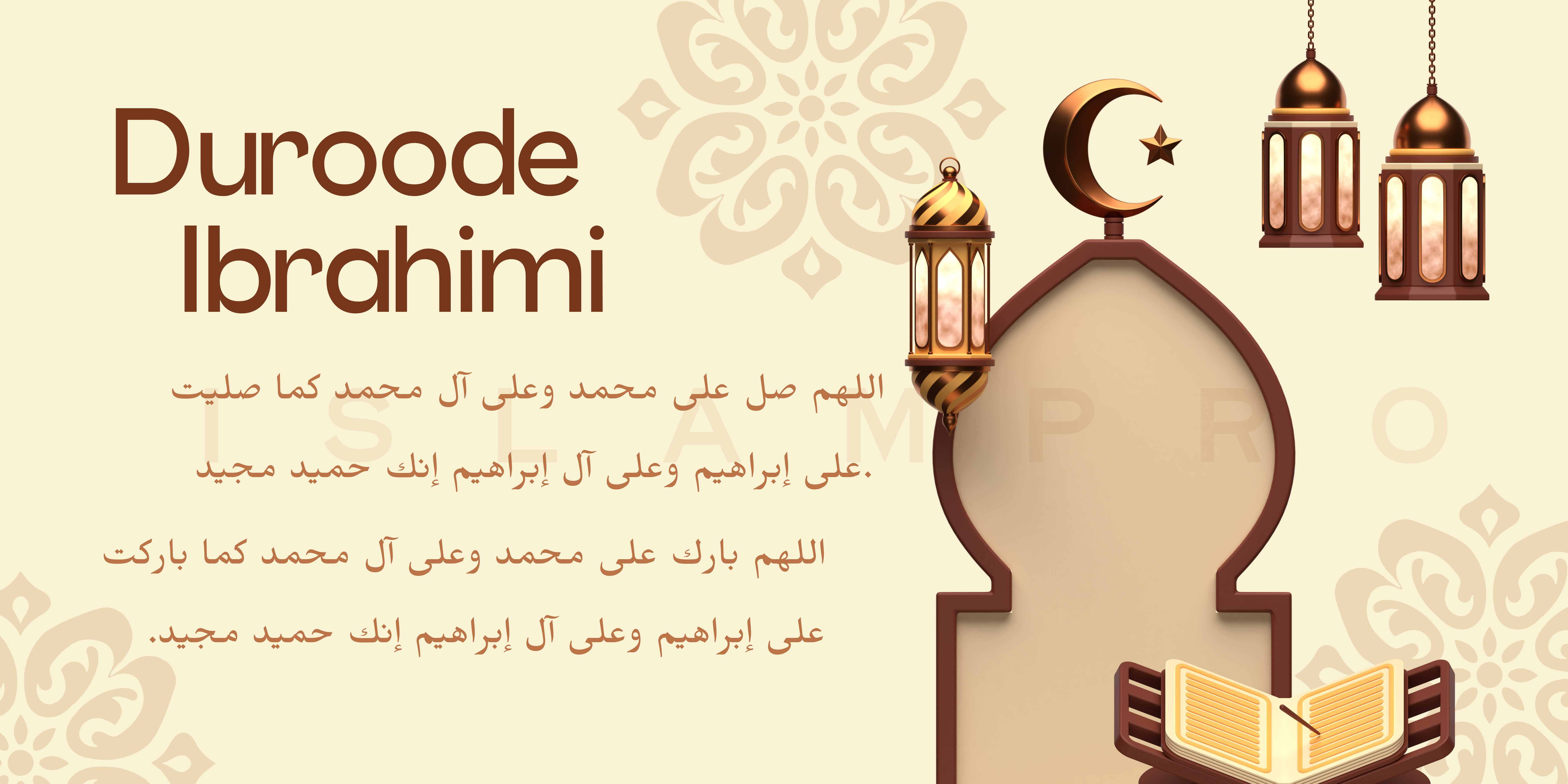
Duroode Ibrahimi | Virtues and Significance in Quran and Hadith

Introduction

The Duroode Ibrahimi, also known as Salat al-Ibrahimiyya, holds a unique and significant place in Islamic worship. It is a form of sending blessings and salutations upon Prophet Ibrahim (Abraham) and Prophet Muhammad (peace be upon them), along with their families.

Muslims recite this prayer in every obligatory and voluntary Salah (prayer), specifically during the Tashahhud. The importance of Duroode Sharif is rooted deeply in both the Quran and Hadith, and its recitation is considered a virtuous act, bringing numerous spiritual benefits to those who engage in it sincerely.

Meaning and Structure of Duroode Ibrahimi

Duroode Sharif read With English Translation:

Duroode Ibrahimi English Translation

Arabic 

اللهم صل على محمد وعلى آل محمد كما صليت على إبراهيم وعلى آل إبراهيم إنك حميد مجيد.

اللهم بارك على محمد وعلى آل محمد كما باركت على إبراهيم وعلى آل إبراهيم إنك حميد مجيد.

Translation

“O Allah, send Your blessings upon Muhammad and the family of Muhammad, as You sent Your blessings upon Ibrahim and the family of Ibrahim. Verily, You are Praiseworthy and Glorious.

O Allah, bless Muhammad and the family of Muhammad as You blessed Ibrahim and the family of Ibrahim. Verily, You are Praiseworthy and Glorious.”

This supplication is a part of the Tashahhud, and it acknowledges the greatness of both Prophet Muhammad (PBUH) and Prophet Ibrahim (PBUH) while invoking Allah’s blessings upon their noble families.

Significance in Quran and Hadith

Although the Quran does not specifically mention the Duroode Ibrahimi, it emphasizes sending blessings upon Prophet Muhammad (PBUH).

In Surah Al-Ahzab (33:56),

Allah says

Allah says:

إِنَّ اللَّهَ وَمَلَائِكَتَهُ يُصَلُّونَ عَلَى النَّبِيِّ ۚ يَا أَيُّهَا الَّذِينَ آمَنُوا صَلُّوا عَلَيْهِ وَسَلِّمُوا تَسْلِيمًا

Translation 

“Indeed, Allah and His angels send blessings upon the Prophet. O you who have believed, ask [ Allah to confer] blessing upon him and ask [ Allah to grant him] peace.”

This verse encourages believers to regularly send blessings upon the Prophet. Which includes the recitation of the Duroode Sharif during prayers.

The virtues and importance of Duroode Ibrahimi are more clearly detailed in various Hadiths. Among these, one of the most significant narrations is from Sahih al-Bukhari and Sahih Muslim.

The companions of Prophet Muhammad (PBUH) asked him how they should send blessings upon him. In response, the Prophet (PBUH) taught them the Duroode Sharif.

Virtues of Reciting Duroode Ibrahimi

  1. Fulfillment of Allah’s Command: As highlighted in Surah Al-Ahzab, sending blessings upon Prophet Muhammad (PBUH) is a direct command from Allah. Reciting Duroode Ibrahimi in prayer is a way of fulfilling this divine obligation.
  2. Intercession on the Day of Judgment: The Prophet Muhammad (PBUH) said in a Hadith narrated by Al-Nasa’i and Ibn Hibban: “Whoever sends blessings upon me once, Allah will send blessings upon him tenfold.” By sending blessings upon the Prophet, a believer earns the favor of Allah, increasing their chances of receiving the Prophet’s intercession on the Day of Judgment.
  3. Spiritual Purification: Reciting Duroode Ibrahimi purifies the heart and soul of a believer. It instills love for the Prophet Muhammad (PBUH) and increases one’s consciousness of Allah’s mercy and grandeur.
  4. A Connection with Prophets: The Duroode Sharif honors both Prophet Muhammad (PBUH) and Prophet Ibrahim (PBUH), establishing a bond between two great prophets of Islam. This connection emphasizes the continuity of the prophetic mission and strengthens a believer’s understanding of the shared legacy between these two blessed individuals.
  5. Elevated Status in the Hereafter: Consistently reciting Duroode Sharif ensures that one’s prayers are accepted, and it increases their rank in the sight of Allah. A Hadith narrated by Ibn Majah mentions that the Prophet Muhammad (PBUH) said: “The closest people to me on the Day of Judgment will be those who sent the most blessings upon me.”

Role of Prophet Ibrahim (PBUH) in Duroode Ibrahimi

Prophet Ibrahim (PBUH), the forefather of numerous prophets, is widely recognized in Islam for his unwavering faith, devotion to Allah, and significant role in establishing monotheism.

By invoking blessings upon Prophet Ibrahim (PBUH) alongside Prophet Muhammad (PBUH), Muslims reflect upon the shared mission of both prophets in guiding humanity toward the worship of one God. Prophet Ibrahim’s significance is evident in the Quran as well.

In Surah Al-Baqarah (2:124),

Allah says

Allah says:

وَإِذِ ٱبْتَلَىٰٓ إِبْرَٰهِـمَ رَبُّهُۥ بِكَلِمَـٰتٍۢ فَأَتَمَّهُنَّۖ قَالَ إِنِّى جَاعِلُكَ لِلنَّاسِ إِمَامًۖا قَالَ وَمِن ذُرِّيَّتِىۖ قَالَ لَا يَنَالُ عَهْدِى ٱلظَّـٰلِمِينَ

Translation 

“And [mention] when Abraham was tried by his Lord with commands and he fulfilled them. [Allah] said, ‘Indeed, I will make you a leader for the people.’”

This verse highlights Ibrahim’s pivotal role as a model for leadership and submission to the will of Allah. Reciting Duroode Ibrahimi further reinforces this bond between the two great prophets and their missions.

Incorporating Duroode Ibrahimi into Daily Life

In addition to reciting Duroode Sharif during Salah, Muslims are encouraged to incorporate its recitation in other aspects of their lives. This can include:

  • Reciting it after completing other forms of dhikr (remembrance of Allah).
  • Reciting it during moments of reflection or supplication (dua).
  • Encouraging others to recite it to earn rewards from Allah.

The spiritual impact of this regular practice is profound. It not only strengthens one’s connection to the Prophet Muhammad (PBUH) but also brings peace, mercy, and blessings into their lives.

Conclusion

The Duroode Ibrahimi is more than just a prayer; it is a key act of devotion that encapsulates the love, respect, and gratitude Muslims have for both Prophet Muhammad (PBUH) and Prophet Ibrahim (PBUH). Rooted in Quranic principles and Prophetic teachings.

Durood Sharif

Its virtues are immense, providing both spiritual purification and divine rewards. Through its regular recitation, believers fulfill a critical aspect of their faith, drawing closer to Allah and His beloved messengers.

For every Muslim, understanding and embracing the significance of Duroode Sharif is essential in cultivating a deeper sense of worship, love, and connection with the prophets.

Wa Alaikum Assalam wa Rahmatullahi wabarakatuh Meaning & Arabic Text

The phrase “Wa Alaikum Salaam” serves as the standard response to the greeting “As Salamu Alaykum” in Islamic culture. This greeting exchange, which translates to “Peace be upon you,” is a key aspect of Islamic etiquette and signifies a mutual wish for peace.

It goes beyond a simple acknowledgment of someone’s presence; it is a spiritual exchange rooted in the desire for safety, peace, and blessings from Allah.

In this article, we will explain the full response, “Wa Alaikum Salaam wa Rahmatullahi wa Barakatuh,” its meaning, the correct Arabic text, and pronunciation. Additionally, we will explore the significance of this greeting in Islamic tradition and the appropriate way to respond.

Wa Alaikum Assalam wa Rahmatullahi wabarakatuh in Arabic Text

In Arabic, the full phrase is written as follows:

وَعَلَيْكُمُ ٱلسَّلَامُ وَرَحْمَةُ ٱللَّٰهِ وَبَرَكَاتُهُ

This phrase is used as a formal reply to “As-Salamu Alaykum” and is commonly exchanged between Muslims during daily encounters, prayers, and formal gatherings. Its full form carries a deeper expression of goodwill and divine mercy.

Meaning of Wa Alaikum Salaam wa Rahmatullahi wa Barakatuh in English

The literal translation of “Wa Alaikum Salaam wa Rahmatullahi wa Barakatuh” is:

  • Wa Alaikum Salaam (وَعَلَيْكُمُ ٱلسَّلَامُ): “And upon you be peace.”
  • Wa Rahmatullahi (وَرَحْمَةُ ٱللَّٰهِ): “And Allah’s mercy.”
  • Wa Barakatuh (وَبَرَكَاتُهُ):  “And His blessings.”

Together, the phrase means:

“And upon you be peace, and the mercy and blessings of Allah.”

This is an enhanced version of the basic greeting “Wa Alaikum Salaam” and is often used to show deeper respect and affection towards the person being greeted.

Variations of the Greeting Response

Variations of the Greeting Response

Islamic greeting and its response have different forms. depending on the level of formality and the completeness of the reply.

These variations include:

  • Wa ‘Alaikum As-Salaam (وَعَلَيْكُمُ ٱلسَّلَامُ)
  • Meaning: “And upon you be peace.”
  • This is the shortest and most commonly used version, especially in casual settings or when time is limited.
  • Wa Alaikum As-Salaam wa Rahmatullah (وَعَلَيْكُمُ ٱلسَّلَامُ وَرَحْمَةُ ٱللَّٰهِ)
  • Meaning: “And upon you be peace and Allah’s mercy.”
  • This version adds a wish for Allah’s mercy in addition to peace and is often used to express more goodwill.
  • Wa Alaikum Assalam wa Rahmatullahi wabarakatuh (وَعَلَيْكُمُ ٱلسَّلَامُ وَرَحْمَةُ ٱللَّٰهِ وَبَرَكَاتُهُ)
  • Meaning: “And upon you be peace, Allah’s mercy, and blessings.”

This is the most complete and formal version, often used in special or formal gatherings, or when a person wants to show heightened respect.

Importance of the Islamic Greeting and its Response

The greeting “As-Salamu Alaykum” and its response are more than just pleasantries in Islamic culture. They serve as a way to establish peace, harmony, and goodwill between people.

The exchange of this greeting is highly encouraged and is seen as a form of worship, reflecting the Islamic values of brotherhood, respect, and care for others.

It is also important to note that offering the greeting first is a virtuous act, and responding to the greeting is obligatory. This is rooted in the Quran command, where Allah instructs believers to return a greeting with one that is either equal or better:

“When you are greeted with a greeting, greet with one better than it or return it [in a like manner]. Indeed, Allah is ever, over all things, an Accountant.” (Surah An Nisa 4:86)

Guidelines for Responding to the Islamic Greeting

  • Responding in kind: If someone says “As-Salamu Alaykum,” it is obligatory to reply with “Wa Alaikum As-Salaam.” Failing to respond with a greeting of peace is considered disrespectful and goes against Islamic teachings.
  • Responding with a better greeting: It is commendable to respond with a better greeting than what was initially given. For instance, if someone says “As-Salamu Alaykum,” replying with “Wa Alaikum As-Salaam wa Rahmatullahi” (and Allah’s mercy) is considered praiseworthy.
  • Adding “Wa Barakatuh” for blessings: The phrase can be extended further by adding “Wa Barakatuh,” expressing a desire for Allah’s blessings as well.
  • Not reducing the greeting: It is considered improper to reduce the greeting when responding. For example, if someone greets you with “As-Salamu Alaykum wa Rahmatullahi wa Barakatuh,” responding with just “Wa Alaikum As-Salaam” would be insufficient.

Spiritual Significance of As Salamu Alaykum

The greeting “As-Salamu Alaykum” holds deep spiritual meaning. When someone says this, they are not only offering a wish for peace but also invoking Allah’s protection and blessings upon the other person.

It serves as a reminder that Muslims are to live in peace with one another and reflect the values of kindness. forgiveness, and mercy in their daily lives.

Responding with “Wa Alaikum Salaam wa Rahmatullahi wa Barakatuh” is not merely a polite exchange. it reflects a deeper bond of faith and brotherhood among Muslims.

It is a way of spreading peace, mercy, and blessings in society, reinforcing the idea that every encounter should be filled with positivity and good intentions.

In conclusion, the exchange of the Islamic greeting and its response is a beautiful and meaningful practice that fosters love. respect, and peace within the Muslim community.

Whether it’s a brief encounter or a formal meeting, this greeting carries the weight of a prayer and supplication. encouraging individuals to uphold the highest standards of mutual respect and goodwill.


Subhanallahi Wa Bihamdihi Subhanallahil Azeem Meaning & Importance

The phrases “Subhanallahi wa Bihamdihi” and “Subhanallahil Azeem” carry profound significance in Islam. These short but powerful expressions glorify Allah, acknowledging His greatness and majesty. Reciting them regularly brings immense reward and pleasure from Allah.

In this article, we will explore the meaning of these phrases in English, their Arabic text, related Hadiths, and the many benefits of incorporating them into daily remembrance (zikr).

Meaning of Subhanallahi Wa Bihamdihi Subhanallahil Azeem in English

“Subhanallahi Wa Bihamdihi” means Glory be to Allah, and all praise is due to Him, while “Subhanallahil Azeem” means Glory be to Allah, the Great. Together, these phrases glorify Allah for His greatness, power, and majesty, affirming that nothing can compare to Him in authority, wisdom, or knowledge.

Allah is perfect in His essence and attributes, and these phrases serve as a humble reminder of His exalted status.

Subhanallahi Wa Bihamdihi Subhanallahi in Arabic

Below is the Arabic text of these beautiful phrases:

سُبْحَانَ اللَّهِ وَبِحَمْدِهِ، سُبْحَانَ اللَّهِ العَظِيمِ

Translation

Subhanallahi Wa Bihamdihi Subhanallahil Azeem Translation

It is highly recommended to recite these phrases frequently, as they are beloved to Allah, easy to say, and weigh heavily on the scales of good deeds.

Hadiths on Subhanallahi Wa Bihamdihi Subhanallahi Azeem

Hadith 1:

Abu Hurairah (رضي الله عنه) reported that the Messenger of Allah (ﷺ) said:

“There are two statements that are light on the tongue, heavy on the scales, and are dear to the Merciful: Subhanallahi wa Bihamdihi, Subhanallahi Azeem (Glory be to Allah and all praise is due to Him, glory be to Allah the Great).” [Bukhari (6406, 6682, 7563) and Muslim (2694)]

Hadith 2:

Jabir (رضي الله عنه) reported that the Prophet (ﷺ) said:

“For the one who says Subhanallahil azeem wa bihamdihi (Glory be to Allah, the Magnificent, and all praise is due to Him), a palm tree will be planted for him in Jannah.” [Tirmidhi (3464, 3465), Ibn Hibban (2335)]

Benefits of Reciting

Zikr, or the remembrance of Allah, is a cornerstone of Islamic worship. The renowned scholar Ibn Qayyim (RA), in his book “Al-Waabilus Sayyib,” has outlined over 100 virtues of zikr.

Reciting “Subhanallahi wa Bihamdihi” and “Subhanallahil Azeem” brings several benefits:

  • Repels Shaitan and weakens his influence.
  • Pleases Allah, drawing closer to His mercy.
  • Relieves anxiety and stress, offering peace and comfort to the heart.
  • Increases joy and happiness, filling the heart with light.
  • Strengthens the body and mind, fostering resilience.
  • Brightens the face and heart, reflecting inner serenity.
  • Attracts sustenance, leading to material and spiritual blessings.
  • Deepens love for Allah, strengthening faith and devotion.
  • Profound zikr leads to a deeper connection with Allah, fostering awareness of His presence, recognition of His greatness, and an understanding of His divine attributes.
  • In essence, frequent recitation of these phrases opens the door to Allah’s love, fills life with peace, and ensures success in both this life and the Hereafter.

By making “Subhanallahi wa Bihamdihi Subhanallahi” a regular part of your daily zikr, you not only gain Allah’s favor but also unlock a life filled with blessings, tranquility, and ultimate success.

Innallaha Ma Sabireen Meaning, Significance, and Benefits

The Quranic verse “Innallaha ma Sabireen” (Surah Al-Baqarah 2:153) highlights Allah’s constant support for those who practice patience in times of adversity. This verse reassures believers that Allah is always with those who endure trials with perseverance and steadfastness, guiding and comforting them through the most challenging moments.

Arabic Text “Innallaha Ma Sabireen”

Here is the verse in Arabic:

إِنَّ ٱللَّهَ مَعَ ٱلصَّٰبِرِينَ

Meaning of as Innallaha Ma Sabireen in English

Innallaha Ma as Sabireen means, Indeed, Allah is with the patient.

Quranic Verses of Innallaha Ma As-Sabireen in the Quran

The importance of patience (Sabr) is frequently emphasized in both the Quran and Hadith. The verse Innallaha Ma as-Sabireen is mentioned in Surah Baqarah (2:153).

The full verse reads

يَٰٓأَيُّهَا ٱلَّذِينَ ءَامَنُواْ ٱسۡتَعِينُواْ بِٱلصَّبۡرِ وَٱلصَّلَوٰةِۚ إِنَّ ٱللَّهَ مَعَ ٱلصَّٰبِرِينَ

Translation:
“O you who have believed, seek help through patience and prayer. Indeed, Allah is with the patient. (Surah AlBaqarah 2:153)

Another relevant verse is found in Surah Al-Anfal (8:46):

وَأَطِيعُواْ ٱللَّهَ وَرَسُولَهُۥ وَلَا تَنَٰزَعُواْ فَتَفۡشَلُواْ وَتَذۡهَبَ رِيحُكُمۡۖ وَٱصۡبِرُوٓاْۚ إِنَّ ٱللَّهَ مَعَ ٱلصَّٰبِرِينَ

Translation:
And obey Allah and His Messenger, and do not dispute and [thus] lose courage and [then] your strength would depart; and be patient. Indeed, Allah is with the patient. (Surah Al-Anfal 8:46)

Understanding Sabr in Islam

In Islam, Sabr or patience is a core virtue. Islamic scholars identify three primary forms of patience:

Persisting through the challenges of faith, such as fasting, praying, and fulfilling religious obligations despite difficulties.

Patience in avoiding sinful behavior, Resisting temptations and desires that lead to sinful actions, such as lying, stealing, or engaging in other prohibited activities.

Facing life’s trials with gratitude and trust in Allah’s plan, knowing that hardships are opportunities for spiritual growth.

The Quran advises believers to be patient and endure, as seen in Surah Aal-Imran (3:200):

يَٰٓأَيُّهَا ٱلَّذِينَ ءَامَنُواْ ٱصۡبِرُواْ وَصَابِرُواْ وَرَابِطُواْ وَٱتَّقُواْ ٱللَّهَ لَعَلَّكُمۡ تُفۡلِحُونَ

Translation:
O you who have believed, be patient, persevere, and remain steadfast, and fear Allah so that you may be successful. (Surah Aal-Imran 3:200)

Virtues of Patience (Sabr)

Patience is regarded as an unyielding force in Islam. Allah promises that those who are patient will receive reward without limit, and He is always with those who remain steadfast. The Prophet Muhammad (peace be upon him) also taught that patience brings victory, relief, and ease after hardship.

Allah’s guidance for the patient is clear in multiple Quranic verses, including:

Surah Ale Imran (3:120)

But if you are patient and conscious of Allah, their plot will not harm you at all. Indeed, Allah is all-encompassing of what they do.

Surah Yusuf (12:90)

Indeed, he who fears Allah and is patient, then Allah will not allow the reward of those who do good to be lost.

Surah Al Baqarah (2:155-157)

But give glad tidings to those who patiently endure. Who, when disaster strikes them, say, ‘Indeed we belong to Allah, and indeed to Him we will return.

Quranic Verses on the Virtues of Patience

The Quran repeatedly highlights the virtues of patience. Allah loves those who exhibit patience, grants them success, and promises Paradise as a reward for their perseverance:

Surah Al-Mu’minun (23:111)

Indeed, I have rewarded them this Day for their patience; they are indeed victorious.

Surah Al-Shura (42:43)

And whoever is patient and forgives – indeed, that is of the matters [requiring] determination.

Hadiths on the Virtues of Patience

The Prophet Muhammad (peace be upon him) often emphasized the importance of patience in his teachings:

Sahih Bukhari (1496)

The Messenger of Allah said, ‘Whoever is patient, Allah will grant him patience, and no one is given a blessing better and greater than patience.

Sahih Muslim (2999)

How wonderful is the case of a believer! There is good for him in everything, and this applies only to a believer. If prosperity comes to him, he expresses gratitude to Allah, and that is good for him. And if adversity befalls him, he endures it patiently, and that is better for him.”

Conclusion

The verse “Innallaha Ma Sabireen” serves as a powerful reminder for Muslims to remain patient in all circumstances, with the assurance that Allah’s help and blessings will be with those who persevere.

Arabic Calligraphy Innallaha Ma Sabireen

Allah ma sabireen in allah ma sabireen in arabic in allah ma sabireen Inna Allaha Ma Sabireen inna la ma sabireen in arabic innallaha ma as sabireen arabic text innallaha ma as sabireen in arabic calligraphy innallaha ma as sabireen in arabic innallaha ma as sabirin Innallaha Ma as-Sabireen innallaha ma sabireen innallaha ma sabireen arabic text

Innallaha Ma Sabireen

innallaha-ma-sabireen