Saying Alhamdulillah for everything invites Blessings into our lives

What is Alhamdulillah in islam

Alhamdulillah“, al-ḥamdu li-llāhi is an Arabic phrase and a part of of surah Fatihah that holds profound significance for Muslims around the world. It translates to “All praise and thanks are due to Allah” and is a powerful expression of gratitude (شكر ) and acknowledgment of Allah’s countless blessings. This simple yet meaningful phrase reminds us to remain thankful in every situation, whether in ease or difficulty.

Alhamdulillah in Arabic with Translation

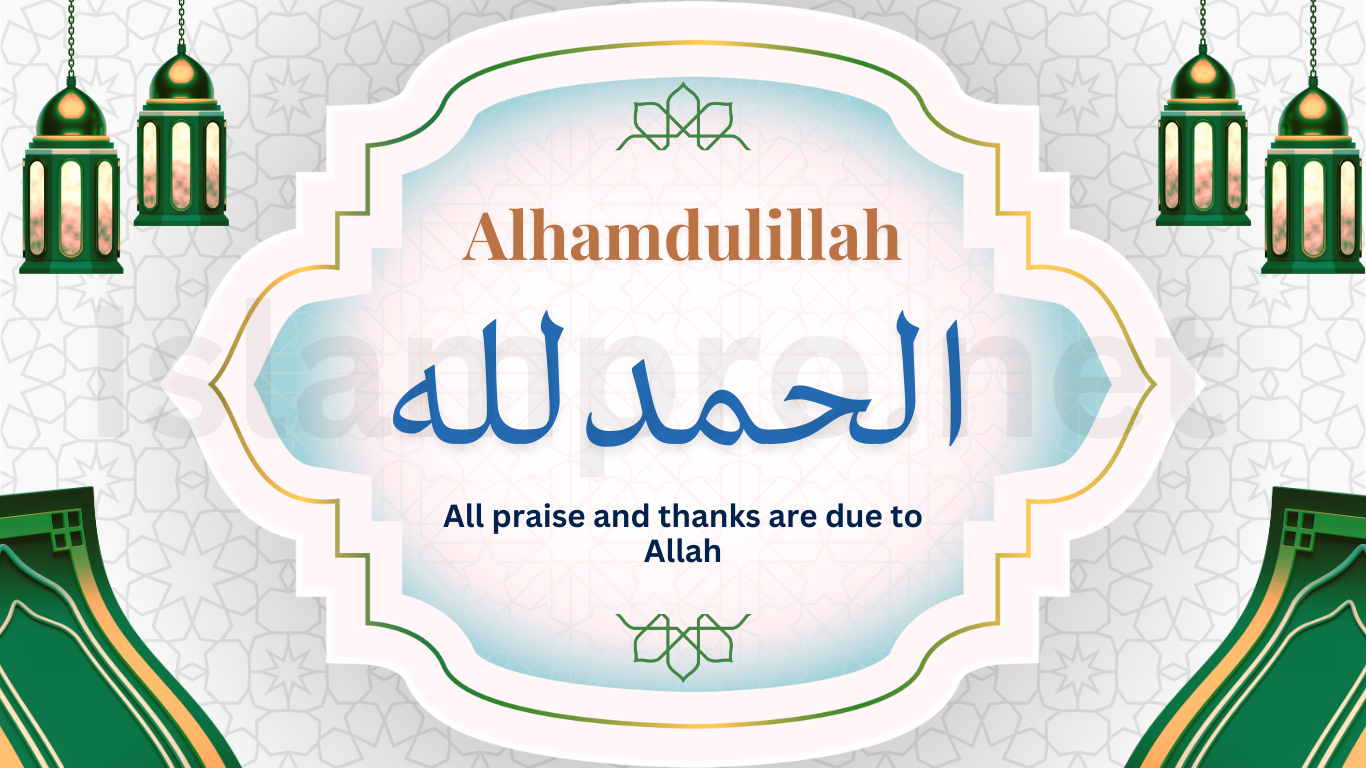
الْحَمْدُ لِلّٰهِ (al-ḥamdu li-llāhi)

All praise and thanks are due to Allah 

Alhamdulillah for everything arabic

The Importance of Saying Alhamdulillah

Thankfulness is a core value in Islam. By saying “Alhamdulillah” we recognize that every blessing—big or small—comes from Allah. It’s not just a word; it’s an act of worship that strengthens our connection with the Creator.

The Quran emphasizes the importance of gratitude repeatedly. Allah says:

“If you are grateful, I will certainly give you more” Surah Ibrahim Verse 7)

This verse reminds us that expressing gratitude through “Alhamdulillah” invites more blessings into our lives.

Alhamdulillah fills the scales

The Prophet Muhammad (ﷺ) said:

“Purity is half of faith, and ‘Alhamdulillah’ fills the scale, and ‘SubhanAllah and Alhamdulillah’ fill up what is between the heavens and the earth.” (Sahih Muslim, Hadith 223)

This hadith highlights the value of saying “Alhamdulillah” in terms of rewards.

Praising Allah After Eating and Drinking

The Prophet Muhammad (ﷺ) said:

“Allah is pleased with the servant who, after eating food, praises Him and after drinking praises Him.” (Sahih Muslim, Hadith 2734)

This encourages Muslims to say “Alhamdulillah” after every meal as a form of thankfulness.

Alhamdulillah as a Means of Forgiveness

The Prophet Muhammad (ﷺ) said:

“Whoever says, ‘SubhanAllah’ 33 times, ‘Alhamdulillah’ 33 times, and ‘Allahu Akbar’ 34 times at the end of every prayer will have their sins forgiven, even if they are as abundant as the foam of the sea.” (Sahih Muslim, Hadith 597)

This hilights the importance of “Alhamdulillah” as part of the remembrance (dhikr) after prayer.

Saying Alhamdulillah After Sneezing

The Prophet Muhammad (ﷺ) said:

“When one of you sneezes, let him say ‘Alhamdulillah,’ and let his brother or companion say to him, ‘Yarhamuk Allah’ (May Allah have mercy on you).” (Sahih al-Bukhari, Hadith 6224)

This shows that saying “Alhamdulillah” is an act of sunnah after sneezing.

These hadiths shows how saying “Alhamdulillah” is not just a word but a profound act of worship, bringing blessings and forgiveness while strengthening our relationship with Allah.

What is the Meaning of Masha Allah

Alhamdulillah for Everything

During moments of joy, saying “Alhamdulillah” invites Allah’s mercy. During trials, it signifies patience and trust in His wisdom. The phrase “Alhamdulillah for everything” encourages us to adopt a mindset of contentment and resilience, accepting that Allah’s plan is always better for us, even if we do not understand it at the moment.

When to Say Alhamdulillah

  • After blessings: When experiencing success, joy, or good news.
  • In hardships: As a way to stay patient and hopeful.
  • In daily life: For every small mercy, like waking up, eating a meal, or enjoying health.
  • In prayer: During salah, Alhamdulillah is part of Surah Al-Fatiha, recited in every rak’ah.
  • After Sneezing: saying “Alhamdulillah” is an act of sunnah after sneezing.
  • After eating and Drinking: Muslims say “Alhamdulillah” after every meal as a form of thankfulness.

Benefits of Saying Alhamdulillah

  • Brings peace to the heart: Gratitude helps reduce stress and brings contentment.
  • Strengthens faith: It reminds us of Allah’s role in every aspect of life.
  • Invites blessings: As promised in the Quran, gratitude attracts more favors from Allah.

Conclusion

Let’s make “Alhamdulillah” a daily habit, a part of our thoughts, words, and actions. Whether in moments of happiness or challenge, saying “Alhamdulillah for everything” is a beautiful way to express gratitude and stay connected to Allah.

May Allah grant us the ability to always be grateful and increase us in His blessings. Alhamdulillah!

What is the Meaning of Masha Allah

Masha Allah” (ما شاء الله) is an Arabic phrase that translates to “As God has willed” or “What Allah has willed” in English. It is often used by Muslims and Arabic speakers as an expression of admiration, gratitude, or appreciation for something good or beautiful, while acknowledging that all blessings come from Allah.

Common Uses:

  1. To Show Admiration:
    • When someone sees something they admire, like beauty, success, or a good deed, they say “Masha Allah” to acknowledge that it is a blessing from God.
    • Example: “You have a beautiful home, Masha Allah!”
  2. To Avoid Envy or the Evil Eye:
    • Saying “Masha Allah” is believed to protect against the evil eye (negative energy caused by jealousy or envy) by attributing the success or beauty to Allah.
    • Example: “Your child is so intelligent, Masha Allah!”
  3. To Express Gratitude:
    • It can also be used to thank Allah indirectly for His blessings.
    • Example: “Masha Allah, everything went well with the project.”

It is a deeply respectful and spiritual phrase that conveys humility and recognition of Allah’s will in all things.

What is Hajj In Islam

What is Hajj

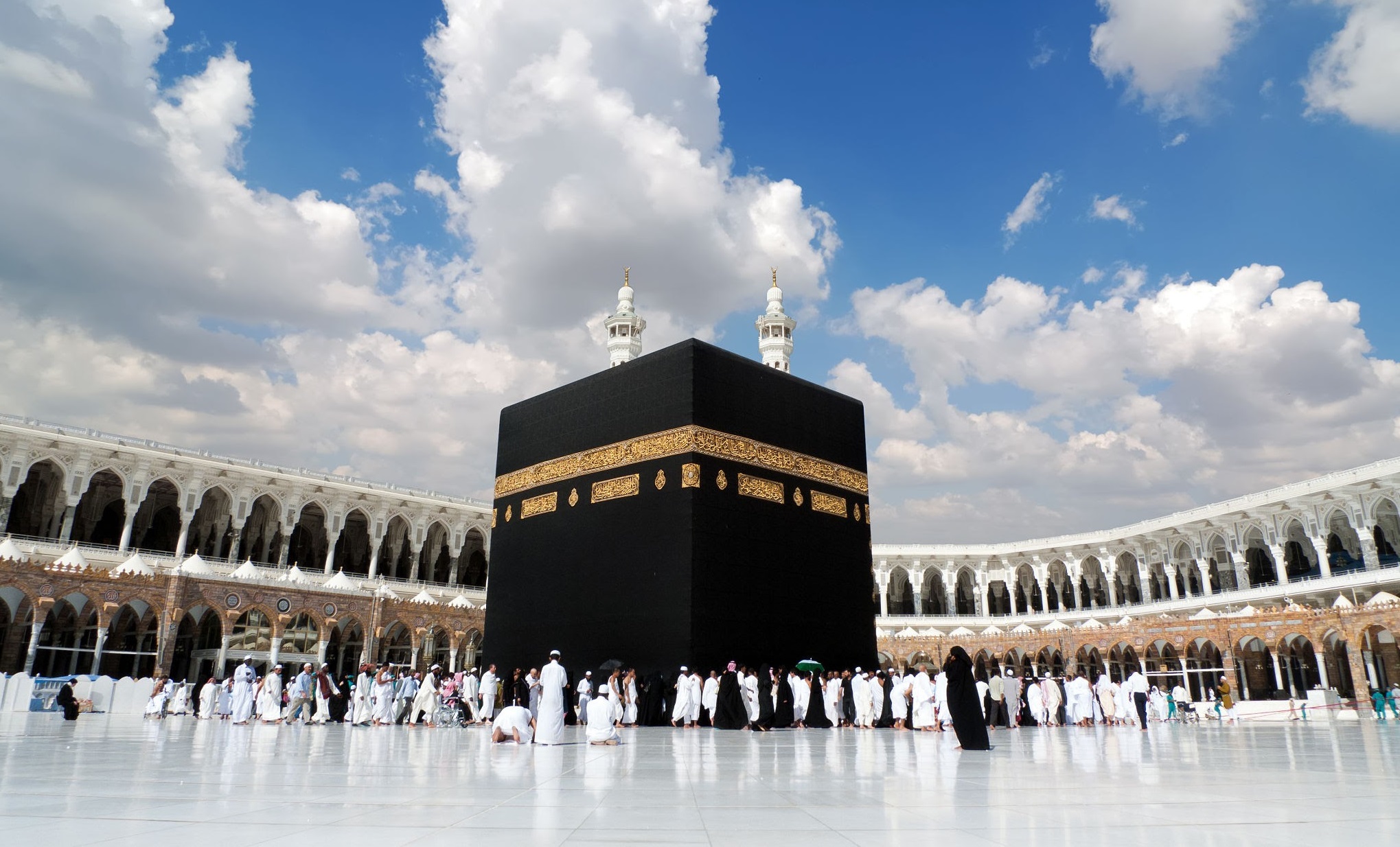
Hajj is one of the five pillars of Islam and represents a mandatory religious pilgrimage to the holy city of Mecca in Saudi Arabia. It is a sacred act of worship that every adult Muslim, who is physically and financially able, is required to perform at least once in their lifetime.

Significance of Hajj

Hajj holds profound spiritual and communal importance in Islam. It is viewed as an opportunity for Muslims to cleanse their sins, renew their faith, and draw closer to Allah. It also emphasizes equality and unity, as all pilgrims wear simple white garments (ihram), erasing distinctions of wealth, status, and nationality.

When and Where?

Hajj is performed annually during the Islamic month of Dhul-Hijjah, specifically from the 8th to the 12th of the month. The focal point of the pilgrimage is the Kaaba, located in the Masjid al-Haram (the Grand Mosque) in Mecca.

Rituals of Hajj

  1. Ihram: Pilgrims enter a state of spiritual purity, wearing special white garments and avoiding certain actions (e.g., arguing, grooming, or engaging in sinful behavior).
  2. Tawaf: Circling the Kaaba seven times in a counter-clockwise direction.
  3. Sa’i: Walking seven times between the hills of Safa and Marwah, commemorating Hagar’s search for water for her son, Ismail.
  4. Arafat: Standing in prayer at Mount Arafat on the 9th of Dhul-Hijjah, which is the pinnacle of Hajj and symbolizes the Day of Judgment.
  5. Muzdalifah: Collecting pebbles for the next ritual and spending the night in prayer and reflection.
  6. Ramy al-Jamarat: Throwing stones at three pillars in Mina, symbolizing the rejection of Satan’s temptations.
  7. Qurbani: Sacrificing an animal (e.g., sheep or goat) to honor Prophet Ibrahim’s willingness to sacrifice his son in obedience to Allah.
  8. Tawaf al-Ifadah: Another circumambulation of the Kaaba, symbolizing deeper submission to Allah.

Outcomes and Spiritual Rewards

After completing the Hajj, Muslims are often honored with the title of “Hajji” and are believed to have their sins forgiven, achieving a spiritual rebirth. It also serves to strengthen the global Muslim community (ummah) through shared worship and experience.

What is Hadith in Islam

The term Hadith refers to the sayings, actions, and approvals of the Prophet Muhammad (peace be upon him). It is one of the primary sources of Islamic teachings and law, second only to the Quran.

Hadiths are classified based on their authenticity, chain of transmission, and content. They are broadly categorized into two main components.

Components of a Hadith

  1. Matn (Text) : The text of the hadith itself, which contains the actual message or teaching.
  2. Isnad (Chain of Narrators) : The chain of narrators who transmitted the hadith. This is important for verifying its authenticity.

Types of Hadith

Hadiths are categorized based on their authenticity:

  1. Sahih (Authentic): Strong and reliable, with a trustworthy chain of narrators.
  2. Hasan (Good): Slightly less reliable than Sahih but still acceptable.
  3. Da’if (Weak): Questionable reliability due to issues in the chain or content.
  4. Mawdu (Fabricated): Not a genuine saying or action of the Prophet.

Most Famous Hadith Collections

The six most recognized collections of Hadith in Sunni Muslims are known as the Kutub al-Sittah (The Six Books) also known as Sihah al-Sitta (الصحاح الستة):

  1. Sahih al-Bukhari: Compiled by Imam al-Bukhari, regarded as the most authentic collection.
  2. Sahih Muslim: Compiled by Imam Muslim, also highly authentic.
  3. Sunan Abu Dawood: A focus on jurisprudential hadith.
  4. Sunan al-Tirmidhi: Includes classifications of authenticity and commentary.
  5. Sunan al-Nasa’i: Known for detailed attention to authenticity.
  6. Sunan Ibn Majah: The last of the six recognized books.


The 4 Holy Books of Prophets | Revealed Books of Allah

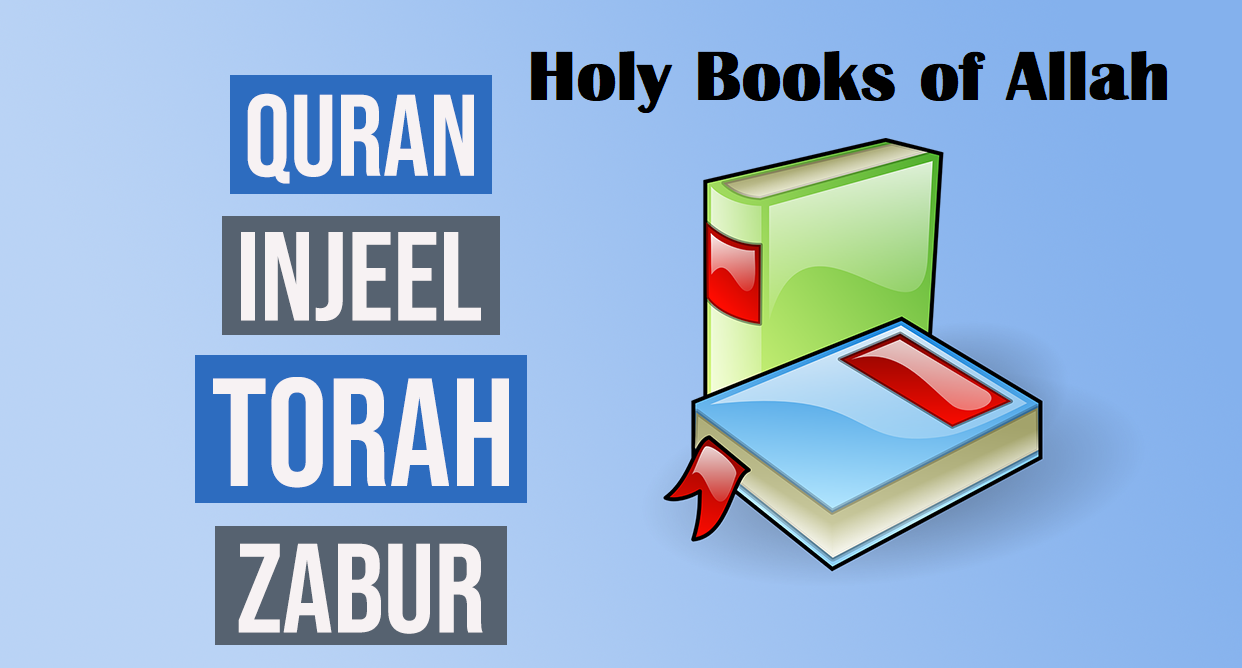
There are 4 major books revealed by Allah to different prophets throughout history. These holy books are considered sacred scriptures and are believed to contain divine guidance for humanity. The four holy books, namely the Tawrat, Zabur, Injeel, and Quran, are considered the books of Allah.

The 4 Books of Allah

1. Tawrat (Torah)

The Tawrat, a sacred scripture, was revealed by Allah to Prophet Moses (peace be upon him) as a divine guidance for the Israelites. It contains, and stories that form the foundation of Jewish faith and practice.

2. Zabur (Psalms)

The Zabur, a divine book filled with poetic verses and prayers, was revealed to Prophet David (peace be upon him) as a source of inspiration and guidance.

3. Injeel (Gospel)

The Injeel, a holy book was revealed to Prophet Jesus (peace be upon him) as a divine message for humanity.

4. Quran

The Quran, the final revelation, Quran was revealed to Prophet Muhammad (peace be upon him) as a divine guidance for all of humanity.

The original versions of the Tawrat, Zabur, and Injeel have been corrupted over time. The Quran, however, is believed to be preserved in its original form.

Naat Lyrics | Comprehensive List of Popular Naat Lyrics

introduction

Naat Lyrics is poetry in praise of the Prophet Muhammad (PBUH), commonly recited in Islamic traditions. These devotional songs or recitations are performed across different cultures and languages, often during religious gatherings, on Islamic holidays like Eid Milad-un-Nabi, or even during private prayer times.

Naats inspire love and admiration for the Prophet, and their lyrics often express deep reverence and gratitude for his teachings, character, and sacrifices.

Here is a detailed list of some of the most popular Naat lyrics from various languages, particularly Urdu and Arabic, which are widely recognized in the Muslim world.

1. Tajdar-e-Haram

Language: Urdu
Famous Performer: Sabri Brothers, Atif Aslam
Opening Lyrics: “Tajdar-e-Haram, ho nigaah-e-karam
Hum gareebon ke din bhi sanwar jayenge
Tajdar-e-Haram…”

This is one of the most famous Naats globally, with a rich history, beautifully recited by the Sabri Brothers and reinterpreted by Atif Aslam. The lyrics are a supplication for blessings and mercy, focusing on the grandeur.

The Prophet Muhammad (PBUH) as the leader of the Kaaba and the hope for alleviation of worldly struggles through his intercession.

2. Mera Dil Badal De

Language: Urdu
Famous Performer: Junaid Jamshed
Opening Lyrics: “Mera dil badal de, mera dil badal de
Aisa dil de jo tera ho…”*

A deeply personal and emotional Naat, this was popularized by the late Junaid Jamshed. The lyrics are a heartfelt prayer asking Allah to change one’s heart and guide them toward righteousness through.

The teachings and example of Prophet Muhammad (PBUH). It reflects on personal transformation and the desire for spiritual purity.

  1. Ya Nabi Salam Alaika

Language: Arabic/Urdu
Famous Performer: Maher Zain
Opening Lyrics: “Ya Nabi salam ‘alayka, ya Rasul salam ‘alayka
Ya Habib salam ‘alayka, salawatullah ‘alayka…”

Maher Zain’s version of this famous Naat has garnered a global audience. The lyrics, sung in Arabic and Urdu, are a salute to the Prophet Muhammad (PBUH).

This Naat conveys respect and blessings upon the Prophet, acknowledging his role as a messenger of Allah and offering continuous salutations.

4. Ilahi Teri Chokhat Par

Language: Urdu
Famous Performer: Owais Raza Qadri
Opening Lyrics: “Ilahi teri chokhat par, bhikari ban kay aya hoon
Karam merey Ilahi, karam merey Ilahi…”

This beautiful Naat by Owais Raza Qadri carries deep spiritual meaning. It portrays a sense of humility as the singer places themselves before the divine. Asking for mercy and forgiveness, and acknowledges their dependence on Allah’s grace.

  1. Faslon Ko Takalluf Hai

Language: Urdu
Famous Performer: Amjad Sabri
Opening Lyrics: “Faslon ko takalluf hai hum se agar, hum bhi bay-taab hain
Naat-e-Pak Muhammad ka le kar sadar, qafile chal diye…”

This Naat by Amjad Sabri revolves around the theme of bridging the spiritual distance between the believer and the Prophet Muhammad (PBUH).

It expresses a longing to be close to the Prophet and underscores the timeless nature of his blessings and guidance.

6. Madine Ki Tajalli Se

Language: Urdu
Famous Performer: Hafiz Tahir Qadri
Opening Lyrics: “Madine ki tajalli se, ujala ho gaya dil ka
Tamanna raat din ye hai Madina dekh lo ik din…”

This Naat paints a vivid picture of the spiritual radiance and enlightenment that Madina, the city of the Prophet, brings to a believer’s heart. The lyrics are filled with a yearning to visit Madina and bask in its holiness.

  1. Mustafa Jan-e-Rehmat Pe Lakhon Salam

Language: Urdu
Famous Performer: Hafiz Tahir Qadri
Opening Lyrics: “Mustafa jaane rehmat pe lakhon salaam
Shama-e-bazm-e-hidayat pe lakhon salaam…”

This is a classical Naat, recited by numerous performers over the years. It is a series of salutations (Salaam) offered to the Prophet Muhammad (PBUH), emphasizing his role as a mercy to the world and a guide for humanity.

8. Main To Ummati Hoon

Language: Urdu
Famous Performer: Waheed Zafar Qasmi
Opening Lyrics: “Main to ummati hoon, ummati hoon
Mere Aqa, mera sab kuch hai Madinay wala…”

In this Naat, the singer acknowledges their identity as a follower of the Prophet Muhammad (PBUH). It expresses devotion to the Prophet and highlights the pride and joy of being part of the Ummah (community) that follows his teachings.

9. Karam Maangta Hoon

Language: Urdu
Famous Performer: Owais Raza Qadri
Opening Lyrics: “Karam maangta hoon, Ata maangta hoon
Main tujh se ae Maula Dua maangta hoon…”

This Naat is a beautiful supplication in which the singer asks for divine mercy and blessings from Allah. It’s performed by the highly popular Naat Khawan, Owais Raza Qadri, and reflects humility and a plea for spiritual aid.

10. Balaghal Ula Bi Kamaalihi

Language: Arabic
Famous Performer: Various
Opening Lyrics: “Balaghal ula bi kamaalihi
Kashafad duja bi jamaalihi
Hasunat jami’u khis’alihi
Sallu ‘alayhi wa aalihi…”

This Arabic Naat is a classic, extolling the virtues and beauty of the Prophet Muhammad (PBUH). The lyrics focus on the perfection.

The Prophet’s character and the light he brought into the world, followed by prayers of peace upon him and his family.

Conclusion

Naats play a significant role in Islamic worship and culture, with their heartfelt lyrics reminding believers of the beauty, grace, and virtues of Prophet Muhammad (PBUH).

The list above includes some of the most popular and beloved Naats in Urdu and Arabic, each with its unique message and emotional appeal. Whether in praise, supplication, or expression of love. Naat lyrics continue to inspire generations of Muslims worldwide.

Ramadan Kareem | A Comprehensive Guide to Fasting

Introduction

Ramadan Kareem is the ninth month of the Islamic lunar calendar and is considered the holiest month for Muslims. It is a time of fasting, prayer, reflection, and community.

Fasting during Ramadan Mubarak is one of the Five Pillars of Islam, making it a fundamental aspect of the faith. The exact dates of Ramadan change each year based on the sighting of the moon, but it lasts for 29 or 30 days.

Key Concepts of Ramadan

  1. Fasting (Sawm)

During Ramadan, Muslims fast from dawn (Fajr) until sunset (Maghrib). This means abstaining from eating, drinking, smoking, and sinful behavior during daylight hours.

Fasting serves as a means of spiritual cleansing and is meant to encourage self-discipline, empathy for the less fortunate, and gratitude for one’s blessings.

  • Suhoor: The pre-dawn meal before the fast begins.
  • Iftar: The meal eaten after sunset to break the fast, traditionally with dates and water.

2. Spiritual Growth and Worship

Ramadan Mubarak is not just about physical fasting but also a period of intense spiritual growth. Muslims are encouraged to engage in extra prayers.

Read the Qur’an, and spend more time in reflection. Special nightly prayers called Taraweeh are performed during Ramadan.

  • Quran Recitation: Many Muslims aim to complete the entire Qur’an during Ramadan Mubarak, as it was revealed in this month.
  • Dua (Supplication): Ramadan Mubarak is considered a time when prayers are especially powerful, and Muslims often make special supplications.

3. Charity (Zakat and Sadaqah)

Charity plays a significant role during Ramadan. Giving to the needy is a vital aspect of Muslim life and is emphasized even more during this month.

  • Zakat: An obligatory form of almsgiving, which is a fixed percentage of a Muslim’s savings and wealth. Many choose to pay their Zakat during Ramadan Mubarak to maximize their blessings.
  • Sadaqah: Voluntary charity, which can be given at any time. Ramadan Mubarak is a time when many people give generously to the poor and those in need.

4. The Night of Power (Laylat al-Qadr)

Laylat al-Qadr, or the Night of Power, is believed to be the night when the first verses of the Qur’an were revealed to the Prophet Muhammad (PBUH).

It is considered the holiest night of the year, and prayers during this night are said to be worth more than a thousand months of worship.

Laylat al-Qadr is observed in the last 10 days of Ramadan Mubarak, typically on one of the odd-numbered nights, with the 27th night being most commonly recognized.

Exemptions from Fasting

While fasting is obligatory for all adult Muslims, there are certain exemptions:

  • Children: Not required to fast until they reach puberty.
  • Pregnant and breastfeeding women: Can be exempt if fasting may harm them or their child.
  • The elderly and ill: People with medical conditions that make fasting harmful are not required to fast.
  • Travelers: People who are traveling long distances are allowed to delay their fast and make it up later.
  • Menstruating women: Women experiencing their menstrual cycle are exempt from fasting during this time but must make up for the missed fasts later.

Ramadan Mubarak in Practice

  1. Iftar Traditions

Across the world, Muslims break their fast with a meal called iftar. The meal typically begins with eating dates and drinking water, following the practice of the Prophet Muhammad (PBUH).

Afterward, a more substantial meal is eaten, and family, friends, and communities often gather together for this meal.

2. Ramadan Around the World

While the principles of Ramadan Mubarak are the same globally, cultural practices and traditions vary.

For example:

  • In the Middle East, Iftar is often a large, elaborate feast shared with extended family.
  • In Southeast Asia, markets sell special Ramadan foods, and communal iftar meals are common.
  • In Turkey, people enjoy “Ramazan Pidesi,” a special bread prepared during Ramadan Mubarak.
  1. Eidal-Fitr

At the end of Ramadan, Muslims celebrate Eid al-Fitr, the “Festival of Breaking the Fast.” It is a joyous occasion marked by prayers, feasts, and giving gifts.

Muslims are required to give a special charity known as Zakat al-Fitr before the Eid prayer to ensure that everyone, including the less fortunate, can partake in the celebration.

Conclusion

Ramadan is a sacred and significant month for Muslims around the world. It is a time for personal reflection, spiritual growth, and community bonding.

The practices of fasting, prayer, and charity help Muslims develop self-discipline, compassion, and a stronger connection with God.

Ramadan Mubarak serves as a reminder of the importance of faith and the values of empathy, gratitude, and generosity that transcend this special month.

Wazifa for Marriage in the Light of Quran and Hadith

Wazifa for Marriage is one of the most significant aspects of a Muslim’s life, as it is not only a social contract but also a spiritual union designed to foster mutual love, mercy, and tranquility.

In Islam, the concept of Wazifas refers to specific prayers, supplications (dua for marriage), or verses from the Quran that are recited with the intention of seeking Allah’s blessings in various aspects of life, including marriage.

Many individuals and families look for Wazifa to expedite or ease the process of marriage, especially in cases where there are delays or difficulties. The use of Wazifa, based on the teachings of the Quran and Hadith, is a means to seek Allah’s guidance and help while maintaining complete trust in His divine plan.

Concept of Wazifa in Islam

A Wazifa is a structured form of supplication or prayer, often performed consistently for a set number of days with sincerity, humility, and trust in Allah’s mercy.

Although Wazifa is not directly mentioned in the Quran or Hadith as a specific term, its practice is based on the encouragement to engage in dhikr (remembrance of Allah) and dua for marriage (supplication).

Prophet Muhammad (PBUH) said:

“The supplication is worship.” (Tirmidhi)

This highlights the importance of asking Allah for help through supplication. Wazifa, in this context, is a way to enhance a person’s spiritual connection and dependence on Allah.

Text and Translation of Wazifa for Marriage

Arabic

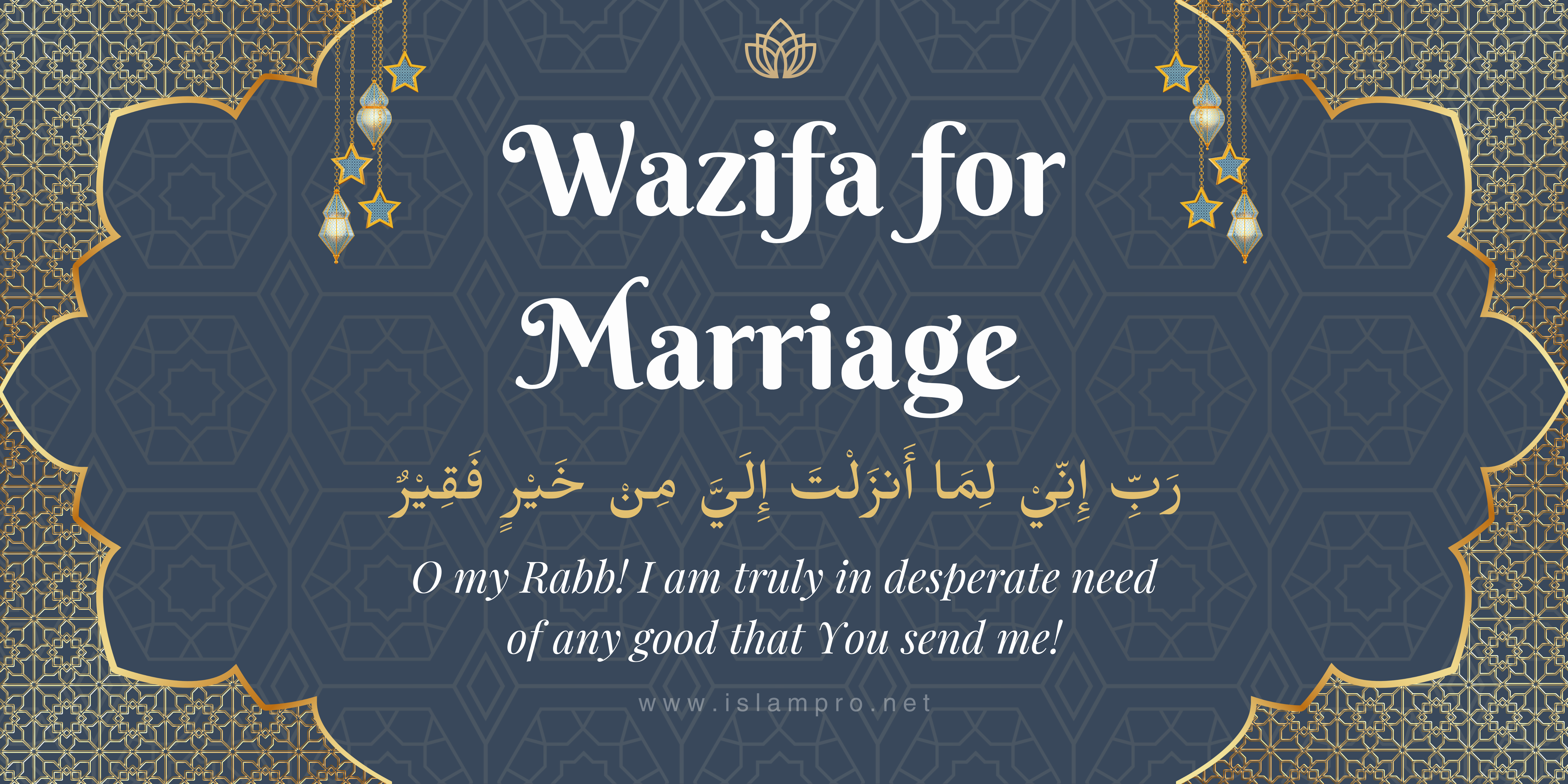
رَبِّ إِنِّيْ لِمَا أَنزَلْتَ إِلَيَّ مِنْ خَيْرٍ فَقِيْرٌ   

Translation

O my Rabb! I am truly in desperate need of any good that You send me!         (Surat al-Qasas, 28:24)

Marriage in Islam

Marriage is a significant sunnah of the Prophet Muhammad (PBUH). It is considered half of one’s faith.

It helps maintain chastity, fulfills emotional and social needs, and strengthens society through the foundation of the family.

The Quran states:

“And among His signs is this, that He created for you mates from among yourselves, that you may dwell in tranquility with them, and He has put love and mercy between your hearts.” (Quran 30:21)

This verse emphasizes the spiritual and emotional bond that marriage fosters, showing that it is a relationship blessed by Allah.

Recommended Wazifa for Marriage

Here are a few powerful Wazifa, based on verses from the Quran and authentic dua for marriage from the Hadith, that are often recited by Muslims with the intention of asking Allah for help in marriage matters.

  1. Surah Al-Furqan (25:74)

This verse is a powerful supplication for seeking righteous spouses and progeny. It can be recited by both men and women who wish to marry and desire a peaceful, loving family life.

“Our Lord, grant us from among our wives and offspring comfort to our eyes and make us an example for the righteous.” (Quran 25:74)

Recite this verse regularly after your five daily prayers, with the intention of asking Allah for a good spouse and a harmonious marriage.

  1. Surah Al-Anbiya (21:89)

This is the supplication of Prophet Zakariya (AS), who asked Allah for righteous offspring. While primarily about children, it is also applicable to seeking a spouse, as both desires are related to family life.

“My Lord, do not leave me alone [without offspring], though You are the best of inheritors.” (Quran 21:89)

Recite this dua for marriage, especially when experiencing delays in finding a spouse, while trusting that Allah’s timing is perfect.

  1. Dua of Prophet Musa (AS)

This supplication was made by Prophet Musa (AS) when he fled to Madyan, seeking refuge and guidance. Soon after, he was blessed with a home and a spouse.

“My Lord, indeed I am in need of whatever good You would send down to me.” (Quran 28:24)

This is a versatile dua and can be recited with the intention of asking Allah for the blessing of a spouse and a stable family life. It can be recited regularly, especially in times of hardship or confusion.

  1. Recitation of Ya Wajidu

Reciting the name of Allah “Ya Wajidu” (O Finder) 1111 times after Fajr prayer is believed by some scholars to help in finding a suitable spouse.

It is important to remember that the effectiveness of any wazifa depends on the individual’s sincerity, devotion, and patience.

Additional Supplications for Marriage

Aside from Quranic verses, there are other authentic dua for marriage from Hadith that Muslims can recite to seek Allah’s help in marriage:

Dua for seeking goodness: The Prophet (PBUH) recommended this dua for any important decision in life, including marriage.

“O Allah, I seek the guidance of Your knowledge, and I seek the help of Your omnipotence, and I beseech You for Your magnificent grace…” (Sahih Bukhari)

This dua, known as Dua Istikhara, is prayed when one is uncertain about a decision and is seeking Allah’s guidance.

Etiquettes of Performing Wazifa

To make a Wazifa more effective, certain etiquettes should be followed:

  1. Sincerity: Perform the Wazifa with sincerity, focusing on your intention, and seeking Allah’s pleasure and guidance.
  2. Consistency: It is important to be consistent in performing a Wazifa. Repetition with patience often brings about inner peace and strengthens one’s relationship with Allah.
  3. Trust in Allah: Always trust in Allah’s wisdom and timing. Even if the results are not immediate, trust that Allah has a plan that is better for you.
  4. Cleanliness: Ensure that you are in a state of cleanliness (wudu) when performing Wazifa, as this enhances spiritual purity and focus.
  5. Avoid Desperation: While reciting Wazifa, avoid feeling desperate or rushing the process. Instead, approach it with patience and belief that Allah knows what is best for you.

Conclusion

Wazifa for marriage, like any other supplication in Islam. Is a means to seek divine assistance while acknowledging that all outcomes are in Allah’s hands.

The Quran and Hadith provide numerous examples of supplications and prayers that can be recited to seek Allah’s blessings in marriage.

However, alongside reciting these Wazifa. One must also put in the effort to seek a suitable spouse and take practical steps. Such as consulting family and trusted advisors, and placing trust in Allah’s decree.

In the end, it is essential to remember that Allah’s wisdom is beyond our comprehension. What may seem like a delay or difficulty is often a test of patience and faith. Ultimately leading to what is best for us in both this life and the hereafter.

Duroode Fatih | Benefits and Importance

What is Duroode Fatih?

Duroode Fatih is a special prayer or “Salawat” that holds great significance in Islamic tradition. It is a way of sending blessings upon the Prophet Muhammad (peace be upon him). Which is highly revered in Islam.

The act of sending blessings upon the Prophet is mentioned in the Quran and is considered a meritorious deed. Darood Sharif is one of the many forms of Salawat.

Its uniqueness lies in its profound meanings and the numerous benefits attributed to it by scholars and spiritual leaders.

Text of Duroode Fatih Arabic with Translation

Duroode Fatih

Arabic

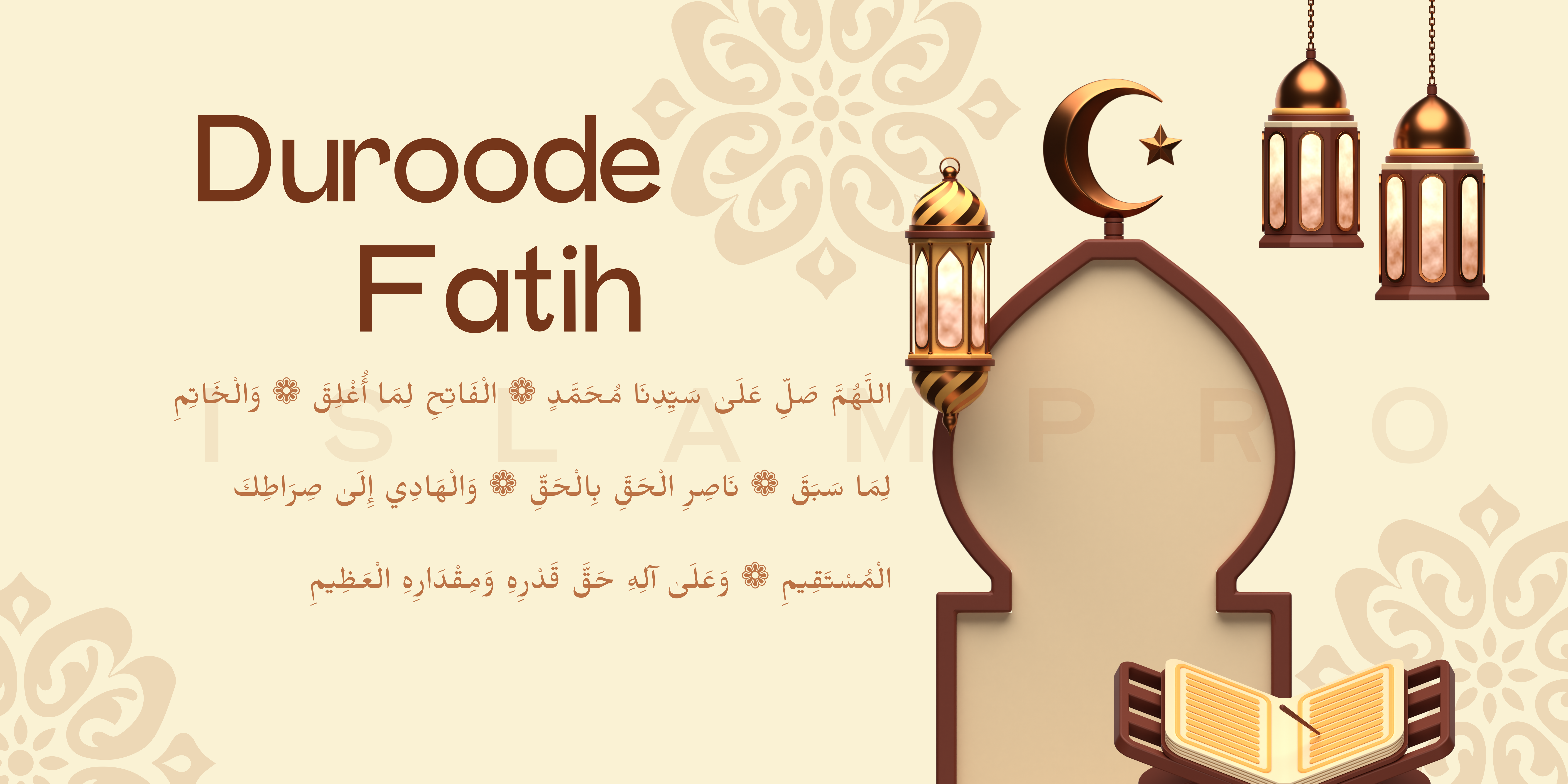
اللَّهُمَّ صَلِّ عَلَىٰ سَيِّدِنَا مُحَمَّدٍ ❁ الْفَاتِحِ لِمَا أُغْلِقَ ❁ وَالْخَاتِمِ لِمَا سَبَقَ ❁ نَاصِرِ الْحَقِّ بِالْحَقِّ ❁ وَالْهَادِي إِلَىٰ صِرَاطِكَ الْمُسْتَقِيمِ ❁ وَعَلَىٰ آلِهِ حَقَّ قَدْرِهِ وَمِقْدَارِهِ الْعَظِيمِ

Transliteration

Allahumma ṣalli ʿalā Sayyidinā Muḥammadini l-Fātiḥi limā ughliq(a), wa l-khātimi limā sabaq(a), nāṣiri l-ḥaqqi bi l-ḥaqq(i), wa l-hādī ilā ṣirāṭika l-mustaqīm(i), wa ʿalā ālihi ḥaqqa qadrihi wa miqdārihi l-ʿaẓīm.

Translation

O Allah, send prayers upon our master Muhammad, the opener of what was closed, and the seal of what had preceded, the helper of the truth by the Truth, and the guide to Your straight path. May Allah send prayers upon his Family according to his greatness and magnificent rank.

This prayer emphasizes Prophet Muhammad (PBUH) as the “Opener” of spiritual and worldly barriers, a “Seal”. The Prophets, and a “Guide” for humanity to follow the straight path.

Benefits of Duroode Fatih

  1. Spiritual Elevation
    Reciting Darood Sharif regularly is said to elevate one’s spiritual status. It helps develop a closer connection. The Prophet Muhammad (PBUH) and aligns one’s heart and soul with the teachings of Islam. This spiritual bond brings inner peace and comfort.
  2. Seeking Intercession of the Prophet (PBUH)
    One of the fundamental beliefs of Muslims is that the Prophet Muhammad (PBUH) will intercede on behalf of his followers on the Day of Judgment. Sending blessings upon him through Duroode Fatih increases. The likelihood of receiving his intercession in the Hereafter.
  3. Opening of Spiritual Doors
    As the text of Darood Sharif refers to the Prophet (PBUH) as the “Opener of what was closed,”, It is believed that reciting this prayer opens doors that are closed to one. It helps in overcoming obstacles in life and eases difficulties.
  4. Increased Reward
    Prophet Muhammad (PBUH) emphasized the virtue of sending blessings upon him, and every time a believer sends Salawat. They are rewarded tenfold by Allah. Brings immense rewards for the one who recites it consistently.
  5. Forgiveness of Sins
    Many scholars have noted that regular recitation of Salawat, including Darood Sharif, is a means of seeking forgiveness from Allah. It cleanses the heart, purifies the soul, and wipes away sins. For those who are remorseful and seek Allah’s forgiveness. Reciting Darood Sharif can be a powerful tool.
  6. Strengthens Faith and Reliance on Allah
    Darood Sharif is a prayer that acknowledges the greatness. The Prophet Muhammad (PBUH) and his pivotal role in guiding humanity to the truth. Which in turn strengthens their faith and reliance on Allah.
  7. Bringing Barakah (Blessings) to One’s Life
    Reciting Duroode Fatih is believed to bring barakah (blessings) into one’s life. The regular recitation of this prayer invites divine blessings into all aspects of life.

Importance of Duroode Fatih

  1. Connection with the Prophet Muhammad (PBUH)
    For Muslims, the Prophet Muhammad (PBUH) is the best of creation and the most beloved of Allah. Through prayers like Darood Sharif. Believers maintain a constant connection with him.
  2. Adherence to the Command of Allah
    In the Quran, Allah commands believers to send blessings upon the Prophet Muhammad (PBUH):

“Indeed, Allah and His angels send blessings upon the Prophet. O you who have believed, ask [ Allah to confer] blessing upon him and ask [ Allah to grant him] peace.” (Quran 33:56)

Reciting Darood Sharif is a way of adhering to this divine command. It shows obedience to Allah and a willingness to follow His guidance.

  1. A Source of Comfort and Relief
    Reciting Salawat, including Darood Sharif, brings comfort to believers in times of distress. It is a source of spiritual healing that brings inner peace. The Prophet’s (PBUH) role as a source of guidance and support.
  2. An Expression of Love and Gratitude
    Duroode Fatih is a way of expressing love and gratitude for the Prophet Muhammad (PBUH). The Prophet dedicated his life to delivering. The message of Islam, and by reciting this prayer, Muslims acknowledge his sacrifices and immense contributions to their spiritual well-being.

Duroode Tanjeena | Benefits and the Power of Recitation

Duroode Tanjeena (also spelled Durood-e-Tanjeena or Salat al-Tanjeena) is a special supplication (durood). The Islamic tradition, widely recited for seeking protection, relief from distress, and the fulfillment of one’s needs.

The word “Durood” refers to sending blessings upon the Prophet Muhammad (peace be upon him), and “Tanjeena” translates to “deliverance” or “rescue.” This particular durood is known for its emphasis on invoking blessings for protection and guidance during times of hardship.

Origin of Duroode Tanjeena

Durood Tanjeena is believed to have been revealed to a great scholar and saint during a period of crisis. Historical sources suggest that a group of people.

Were once on a sea voyage when their ship was caught in a storm. Fearing for their lives, they recited this durood, and miraculously, they were saved from the storm. Since then, it has become widely known as a prayer of deliverance.

Though there is no specific reference to Duroode Tanjeena in the main hadith collections It is popularly recited by Muslims, especially those in the Sufi tradition, for its spiritual benefits.

Text of Duroode Tanjeena

Durood Tanjeena reads:

Durood Tanjeena

Arabic

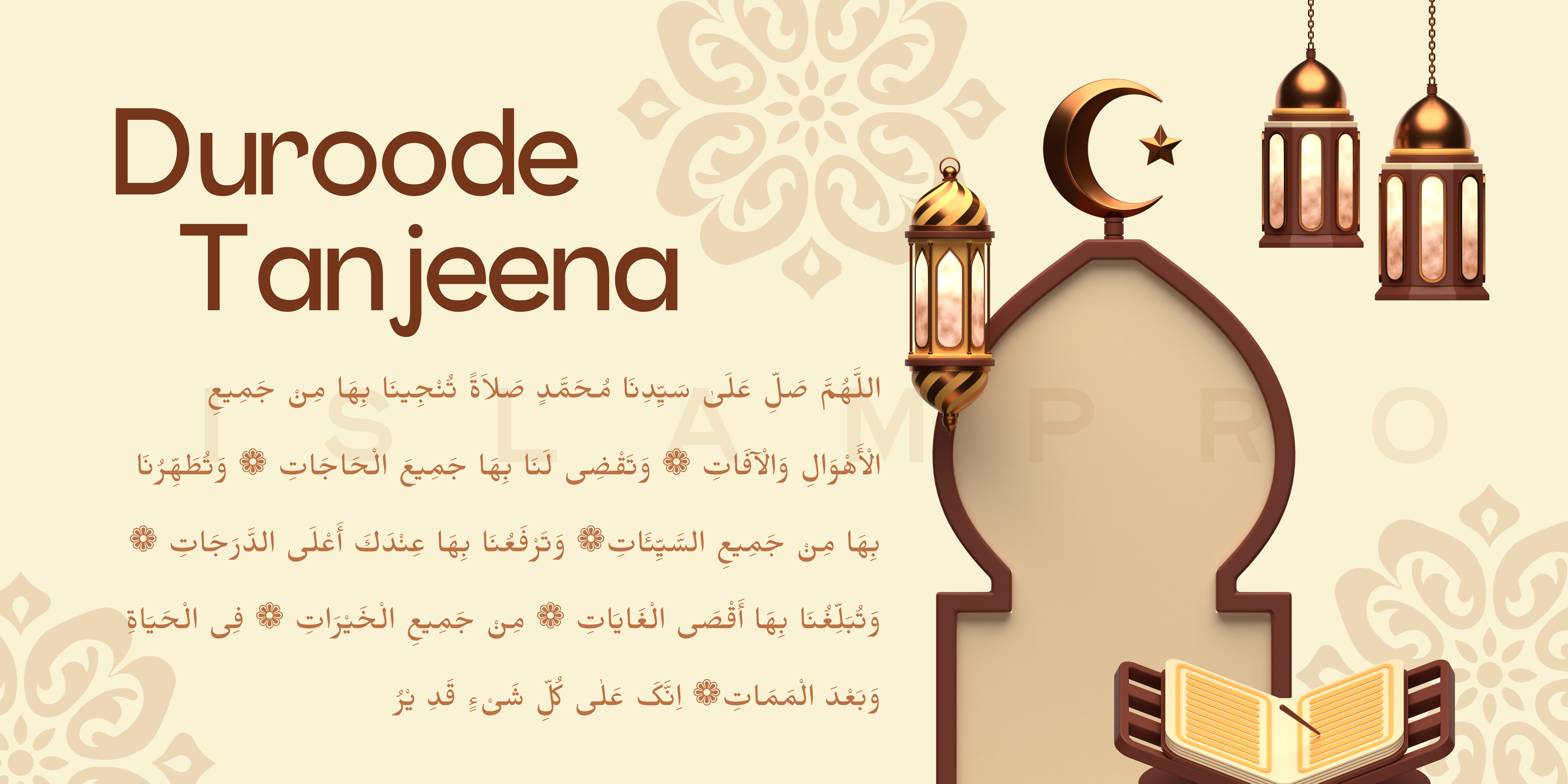
اللَّهُمَّ صَلِّ عَلَىٰ سَيِّدِنَا مُحَمَّدٍ صَلاَةً تُنْجِينَا بِهَا مِنْ جَمِيعِ الْأَهْوَالِ وَالْآفَاتِ ❁ وَتَقْضِى لَنَا بِهَا جَمِيعَ الْحَاجَاتِ ❁ وَتُطَهِّرُنَا بِهَا مِنْ جَمِيعِ السَّيِّئَاتِ❁ وَتَرْفَعُنَا بِهَا عِنْدَكَ أَعْلَى الدَّرَجَاتِ ❁ وَتُبَلِّغُنَا بِهَا أَقْصَى الْغَايَاتِ ❁ مِنْ جَمِيعِ الْخَيْرَاتِ ❁ فِى الْحَيَاةِ وَبَعْدَ الْمَمَاتِ❁ اِنَّکَ عَلٰی کُلِّ شَیْءٍ قَدِ یْرُ

Transliteration

“ALLAHUMMA SALLI ALA SAYYIDINA MUHAMMADIW WA ALA AALI SAYYIDINA MUHAMMADIN SALAATAN TUNAJJINA BIHA MIN JAMI’IL AHWAALI WAL’AFAATI WA TAQDILANA BIHA MIN JAMI’IL HAAJAATI WATU TAHIRUNA BIHA MIN JAMI’IS SAYYI AATI WATAR FA’UNA BI HAA A’LAD DARAJAATI WATU BAL LIGHUNA BIHA AQSAL GHAAYAATI MIN JAMI’IL KHAIRAATI FIL HAYAATI WABA’DAL MAMAATI INNAKA ALA KULLI SHAY IN QADEER.”

Translation

“O, Allah! Bestow blessings upon Muhammad (SAW), and his Family, such blessings through which You may relieve us of all anxieties and calamities. You may satisfy all our needs. You may clean us of all evils and thanks for which You may grant us high position and high rank and status in your presence, and You may lead us to the utmost limit of our aspirations and capacity in whatever is best in this world as well as in the world. Hereafter, as you have full power over everything.”

Benefits of Reciting Duroode Tanjeena

The Duroode Tanjeena is recited with deep faith and devotion for a range of spiritual, emotional, and worldly benefits. Here are some of the key benefits:

1. Relief from Distress and Calamities

One of the main reasons Muslims turn to this durood is for relief in times of crisis. The supplication is believed to bring deliverance from difficult situations, whether personal, financial, or emotional. Historically associated with deliverance from storms and disasters, many Muslims recite this prayer for divine protection and help during overwhelming situations.

2. Fulfilling Needs and Desires

The Duroode Tanjeena is believed to facilitate the fulfillment of one’s legitimate desires and needs. Whether someone is seeking financial stability, a solution to family problems, or success in their career, reciting this durood with sincerity is seen as a means of attaining divine assistance.

3. Spiritual Protection and Peace

Many Muslims recite this durood regularly to safeguard themselves and their loved ones from unseen harms, both in the spiritual and physical realms. It is believed to offer spiritual peace and protection, fostering a sense of inner calm and resilience in the face of life’s challenges.

4. Attaining Blessings and Mercy

Like all duroods, reciting Duroode Tanjeena brings abundant blessings. The act of sending blessings upon the Prophet Muhammad (peace be upon him) is an honorable deed. Many scholars emphasize that those who send blessings upon the Prophet are themselves recipients of blessings and mercy from Allah.

5. Improvement in Personal and Social Circumstances

Some who recite the Duroode Tanjeena do so to improve personal and social situations. Whether for reconciling strained relationships, improving health, or seeking guidance in decision-making. This prayer serves as a source of divine help.

How to Recite Duroode Tanjeena

Muslims are encouraged to recite Duroode Tanjeena with pure intentions and full concentration. The following are common practices associated with the recitation:

  • Frequency: Many people recite it 100 times or more during times of hardship, although there is no fixed number.
  • Timing: It can be recited at any time, though some prefer to recite it after Fajr or Isha prayers when they are focused and undisturbed.
  • Consistency: Some scholars advise that consistency in reciting this durood over a period of time brings more benefits, especially for those facing prolonged challenges.

Conclusion

Duroode Tanjeena is a profound and cherished supplication within the Islamic tradition. Often recited for divine intervention, deliverance from trials, and the fulfillment of one’s needs.

Durood Tanjeena

Its spiritual power lies not only in the act of sending blessings upon the Prophet Muhammad (peace be upon him) but also in the faith and sincerity of the person reciting it.

Whether recited for relief from crises or simply as a daily practice for attaining peace and blessings. Duroode Tanjeena continues to hold a special place in the hearts of Muslims worldwide. It serves as a reminder of the mercy and assistance that can be invoked through sincere supplication and trust in Allah.